


1800s Timeline Box
1800s Timeline Box
SKU:400000015347
Couldn't load pickup availability
DESCRIPTION
Delight in 1800s Candy: A Collection of Civil War Era Candy in the Civil War Candy Box NOT THE CIVIL WAR BOX
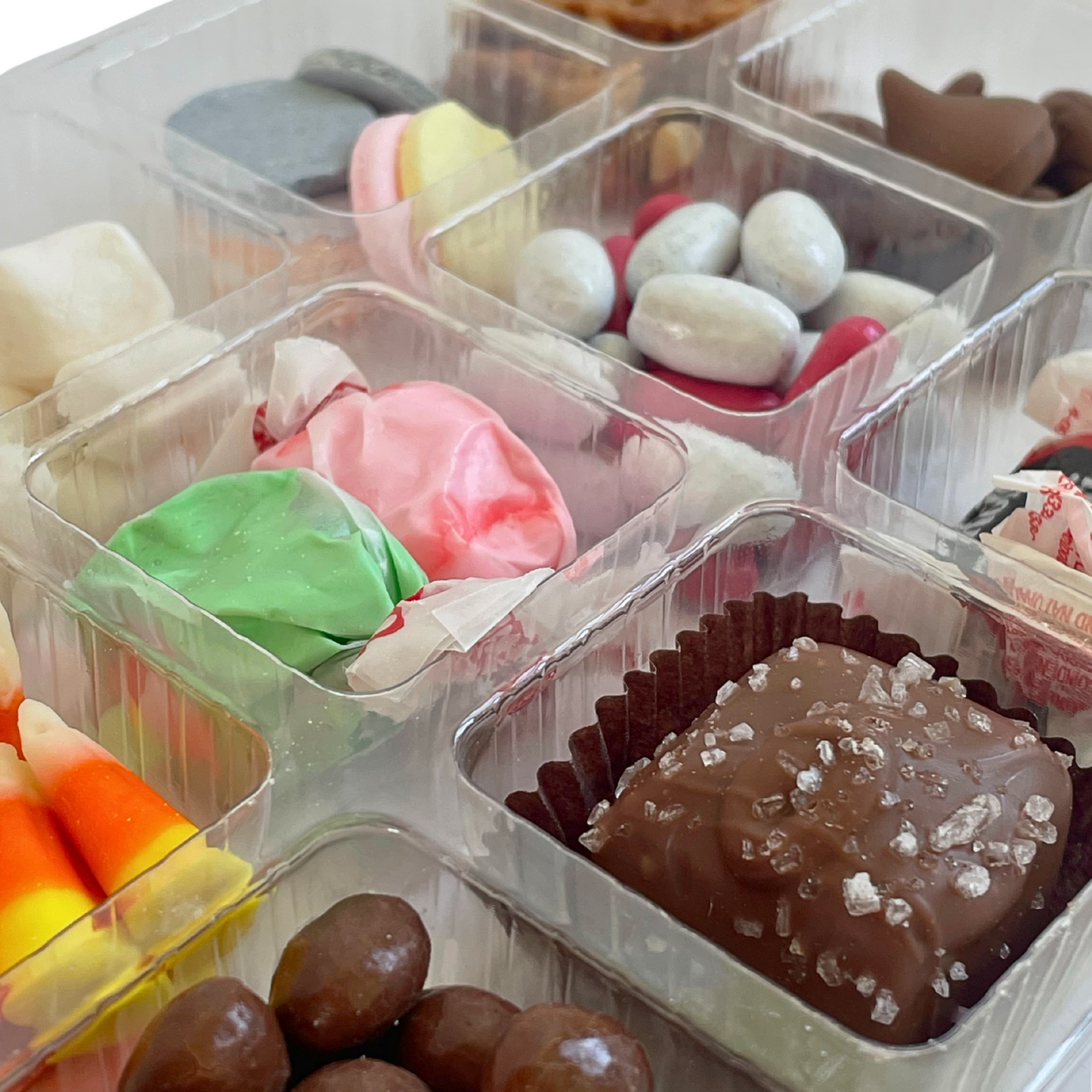
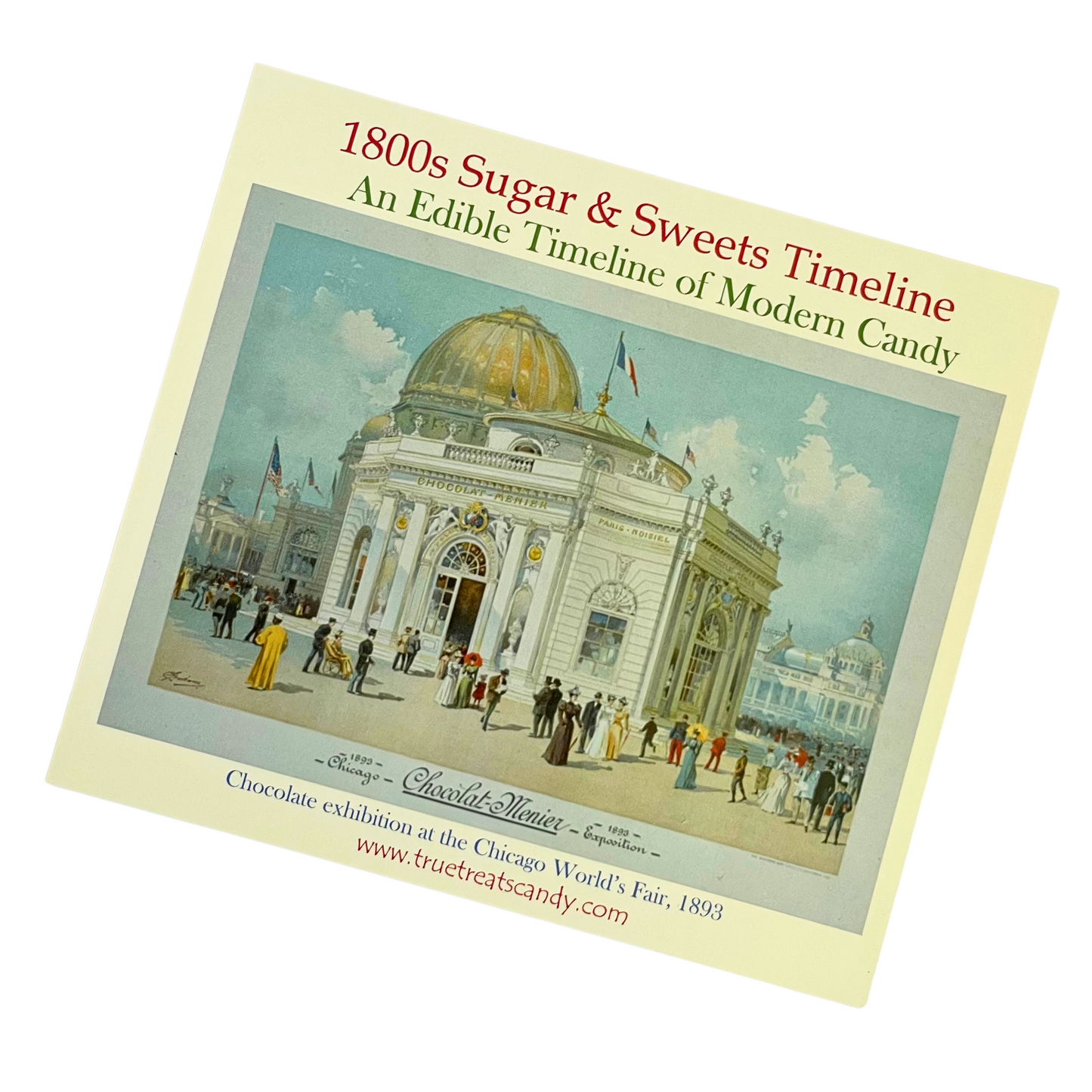
Welcome to the 1800s and your exclusive tour of the sugars and sweets enjoyed in the century when modern candy arrived with a boom! What will you find? Lots of surprises and plenty of memories in the 12 representative sugars and candies! PLUS a keepsake card telling the story of each item you'll sample with a copy of an authentic 19th-century illustration.
Product Details
Product Details
Size: 12 different samples in a 5 15/16" x 1" x 7 3/4" box
Gum Drops (Sugar, Corn Syrup, Cornstarch, Modified Cornstarch, Maltodextrin, FD&C Red 40, Yellow 6, Yellow 5, Titanium Dioxide, Blue 1, Red 3, Natural and Artificial Flavors, Carnauba Wax, Beeswax, Confectioner's Glaze), Marshmallow ( Tapioca Syrup, Cane Sugar, Water, Tapioca Starch, Carrageenan, Soy Protein, Natural Vanilla Flavor. Packaged in the same facility as peanuts, tree nuts, soy, and milk products), Peanut brittle (Sugar, Peanuts, Corn Syrup, Butter (Cream, Salt, Milk), Chocolate Caramel (Sugar, Corn Syrup, Skim Milk, Milk Chocolate, Hydrogenated Vegetable Oil (Soybean, Cottonseed and/or Palm Kernel Oil), Whey Powder, Milk Cream, Salt, Soy Lecithin, Mono and Diglycerides, Artificial Flavor), Tootsie rolls (sugar, corn syrup, palm oil, condensed skim milk, cocoa, whey, soy lecithin, and artificial and natural flavors), Good and plenty (Sugar, Corn Syrup, Enriched Wheat Flour (Flour, Niacin, Ferrous Sulfate, Thiamin Mono-Nitrate, Riboflavin, and Folic Acid), Molasses, Plus 2% or less of Artificial Color (K-Carmine, Red 40 Lake), Gum Acacia, Licorice Extract, Modified Cornstarch, Salt, Caramel Color, Resinous Glaze, Carnauba Wax, Anise Oil, Natural and Artificial Flavor), Taffy (sugar, cornstarch, corn syrup, glycerin, water, butter, salt, natural and/or artificial flavor, and food color), Wilbur buds (Semi-Sweet Chocolate (sugar, chocolate liquor, cocoa butter, milk fat, vanilla, and soya lecithin – an emulsifier), NECCO Wafers (Sugar, Corn Syrup, Gelatin, Cocoa Powder [Treated with Alkali], Natural Flavors, Vegetable Gums [Arabic, Xanthan and Tragacanth], Natural Colors [Red Beet, Purple Cabbage, Turmeric, Caramel Color, Paprika] Glycerin) Chocolate Covered Nuts (Peanuts, Almonds, sugar, cocoa butter, whole milk, chocolate liquor, lecithin, vanillin ) and confectioner's glaze), Sugar Bullet(Cane Sugar), Candy Corn (Sugar, corn syrup, contains less then 2% of salt, glycerin, egg whites, confectionaries glaze, natural and artificial flavors, mineral oil, honey, carnauba wax, coconut oil, artificial colors, FD&C yellow-#6, yellow #5, red #40)
Allergen Disclaimer: Please note that our products are made in a facility that processes peanuts, tree nuts, dairy, soy, and wheat. While we take precautions to prevent cross-contamination, we cannot guarantee that our products are allergen-free.
Historical Insights
Historical Insights
More candies than you know got their start in the 1800s. Unlike the rare and expensive candies of the past, these were especially made for kids – although grown-ups enjoyed them, too. They came in bright colors, assorted flavors, textures and shapes unlike any before. In 1847, pharmacist Oliver Chase invented the NECCO Wafers and about 20 years later, his brother made the Conversation Hearts. American candy-making stopped during the Civil War then returned with gusto…and interesting names. There was “Chicken Feed” later called “Candy Corn” (1880); “saltwater taffy,” a seaside delight with no salt in it (1880s); “Good & Plenty,” the first branded candy that said it all (1893); and British “Allsorts” (1899), with all sorts of licorice in one serving. Chewing gum, made with a tree resin base, was sold in the late 1880s with selections such as Adam’s “Black Jack” gum and “Beemans” with a picture of the very handsome Dr. Beeman in the ads.
These candies were loose and poured into bags or wrapped in paper. In the early 1900s, another concept made candy even more readily available – machines that could wrap the sweets, getting them ready-to-go to store shelves everywhere.
Did you know? Penny candy originated in apothecaries, And why? Because pharmacists used sugar in medicines to mask bad flavors but also as a medicine in its own right. One early candy, the NECCO Wafer, was made in 1847 with a pill cutting machine.
ANOTHER word for Penny Candy? Penny candy originally cost a penny or less. They lasted so long – and so many other candies were evented - that they got another name… RETRO.
Shipping
Shipping
📩 Check Your Email for the Tracking Number! 📩
📢 B2B orders may take longer to ship than estimated
Please allow 3-5 business days for processing new retail orders. Many of our products are hand-made and assembled, so some orders may experience some delays depending on availability. Most orders are shipped within 5 business days. If you have any questions or concerns about your order please reach out to us.


The Birth of Penny Candy: Civil War Era Candy, 1800s Candy, and Sweets That Shaped the 1800s
More candies than you know got their start in the 1800s. Unlike the rare and expensive candies of the past, these were especially made for kids – although grown-ups enjoyed them, too. They came in bright colors, assorted flavors, textures and shapes unlike any before. In 1847, pharmacist Oliver Chase invented the NECCO Wafers and about 20 years later, his brother made the Conversation Hearts. American candy-making stopped during the Civil War then returned with gusto…and interesting names. There was “Chicken Feed” later called “Candy Corn” (1880); “saltwater taffy,” a seaside delight with no salt in it (1880s); “Good & Plenty,” the first branded candy that said it all (1893); and British “Allsorts” (1899), with all sorts of licorice in one serving. Chewing gum, made with a tree resin base, was sold in the late 1880s with selections such as Adam’s “Black Jack” gum and “Beemans” with a picture of the very handsome Dr. Beeman in the ads. These candies were loose and poured into bags or wrapped in paper. In the early 1900s, another concept made candy even more readily available – machines that could wrap the sweets, getting them ready-to-go to store shelves everywhere. Did you know? Penny candy originated in apothecaries, And why? Because pharmacists used sugar in medicines to mask bad flavors but also as a medicine in its own right. One early candy, the NECCO Wafer, was made in 1847 with a pill cutting machine. ANOTHER word for Penny Candy? Penny candy originally cost a penny or less. They lasted so long – and so many other candies were evented - that they got another name… RETRO.
The Sweet Journey Through Time Starts Here!
True Treats is the only historically accurate candy store in the world, bringing the past to life through researched sweets, teas, syrups, and more. Every product is rooted in history, telling the story of how people from all walks of life enjoyed treats through time. Leading this effort is Susan, a nationally recognized candy historian, researcher, and author who appears regularly on TV, radio, and in major publications. With over 40 years of experience, she has written ten books and founded True Treats to share the fascinating history of candy in a fun and delicious way. Susan’s work uncovers the surprising origins of America’s favorite sweets, from ancient uses of sugar to the candies of the 1900s. Through True Treats, Susan makes history an interactive experience, allowing customers to taste the past while learning the stories behind every bite.


