




Sugar Coated Violet Petals
Sugar Coated Violet Petals
Couldn't load pickup availability
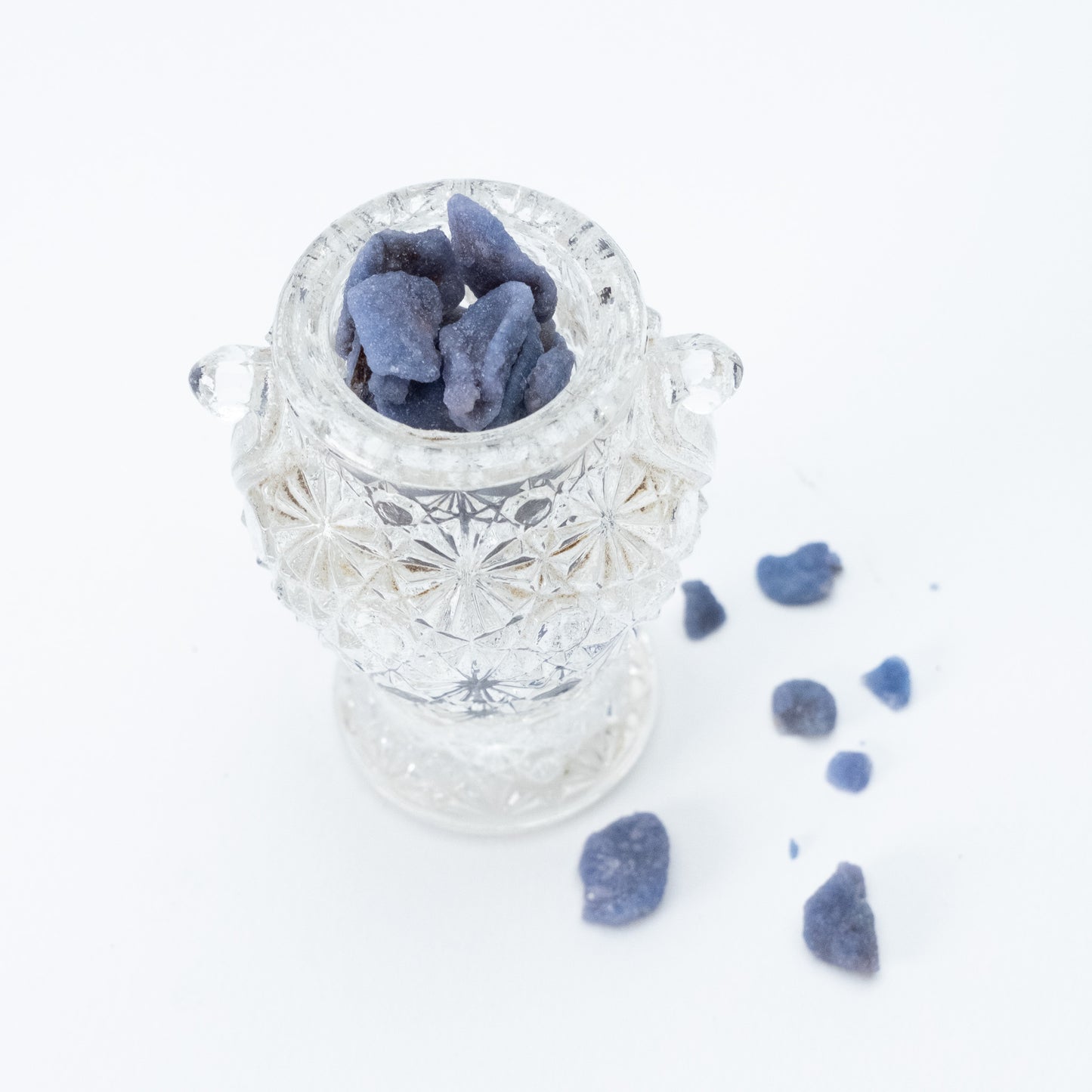
Our candied violet petals are small, purple-colored gems, part of the tradition of 1700s sweets, embedded in a tasty, protective sugar shell. This shell is part of the petal eating experience. It’s a preservative, protecting the dried petal inside, and a flavor enhancer with a distinct violet taste of its own. The sugar also has a delightful crunch and makes the candied petals durable enough to make a presence atop ice cream, frostings on a cake, or a garnish at a tea-time dessert. As for the taste: sweet and unmistakenly floral, violet flavor rising up in every bite making them a truly delightful candy treat. A wonderful addition to any historical candy gift. A truly unique candy with a deserved and venerable history. Now part of our historical candy collection, the history of rose petals is on the label with a period illustration. These petals are from a shop in Toulouse, France which opened in 1818

Satisfaction Guaranteed

Fast & Reliable Shipping
100% Authentic Historic Candy
Product Details
Product Details
Allergen Disclaimer: Please note that our products are made in a facility that processes peanuts, tree nuts, dairy, soy, and wheat. While we take precautions to prevent cross-contamination, we cannot guarantee that our products are allergen-free.
Shipping
Shipping
📩 Check Your Email for the Tracking Number! 📩
📢 B2B orders may take longer to ship than estimated
Please allow 3-5 business days for processing new retail orders. Many of our products are hand-made and assembled, so some orders may experience some delays depending on availability. Most orders are shipped within 5 business days. If you have any questions or concerns about your order please reach out to us.


Petals & Sugar: The Floral Origins of Sweet Delights
The Sweet Journey Through Time Starts Here!


