


Sorghum Drops
Sorghum Drops
SKU:
Couldn't load pickup availability
DESCRIPTION
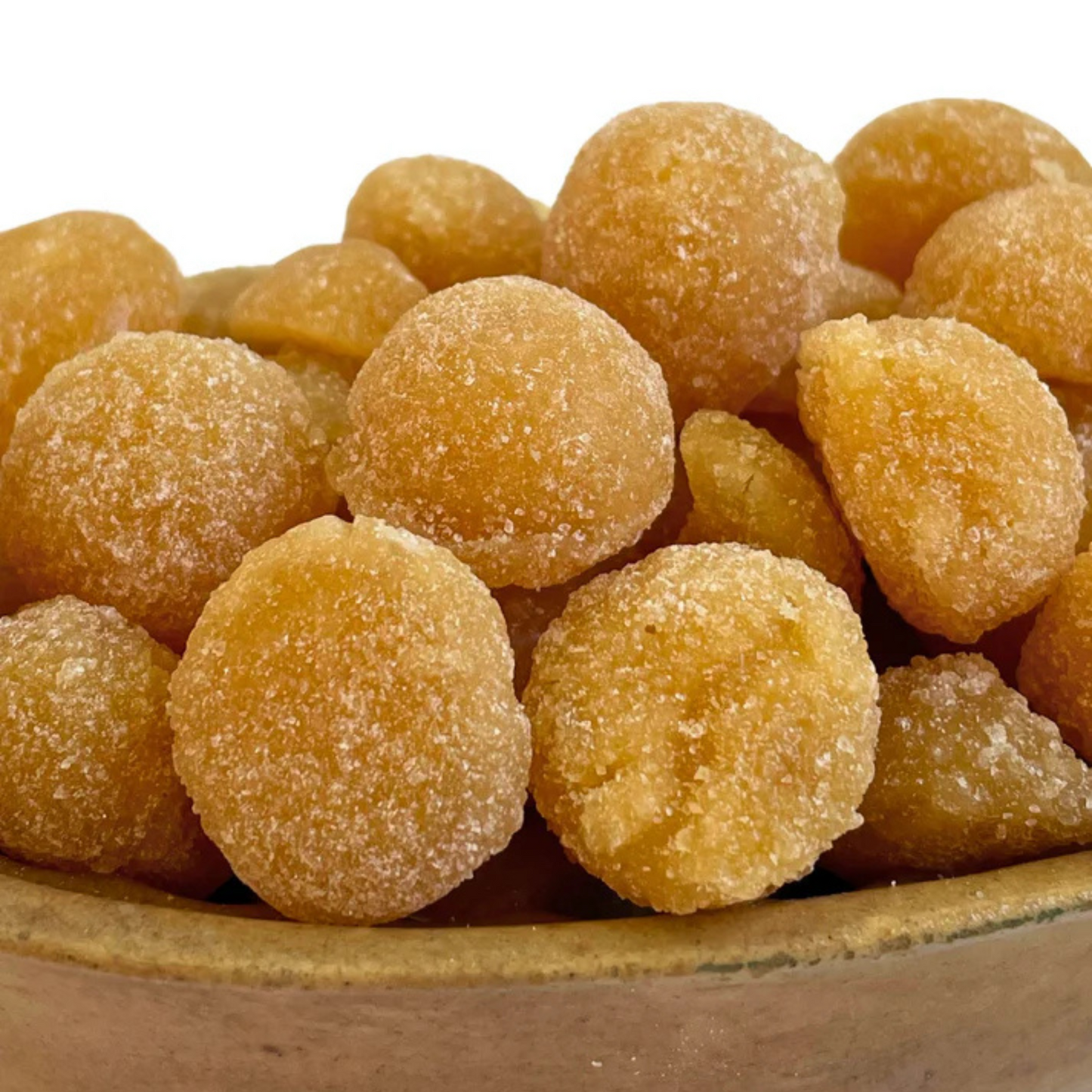
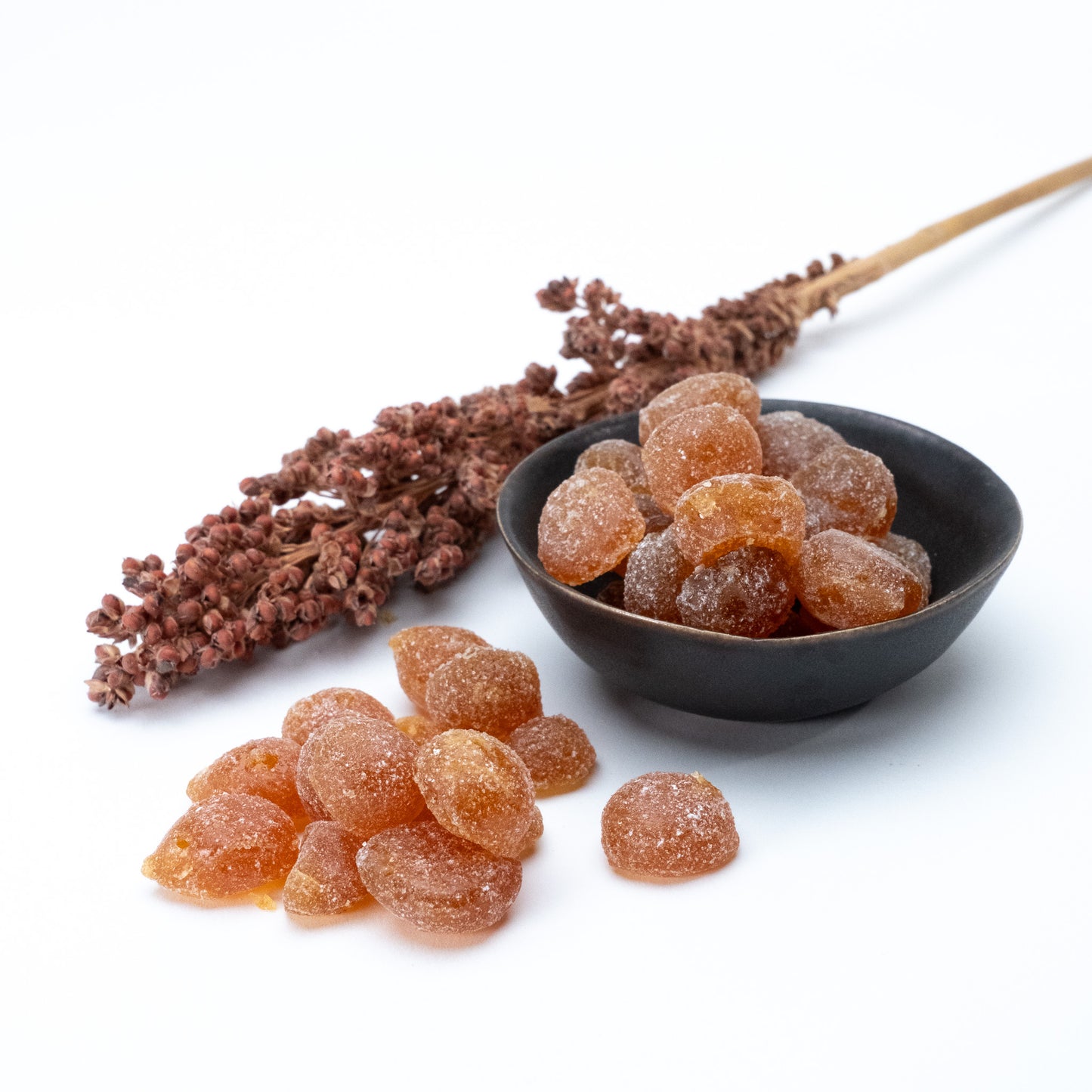
Sorghum drops are a delightful treat – the flavor is warm, slightly grainy, which makes sense as sorghum is a grain. And while sorghum syrup is thick and strong tasting, the drops are light and refreshing. Each piece is small enough to enjoy comfortably, the outer shell sanded with sugar to keep from sticking. A hard-to-find cand – well-worth discovering.
Product Details
Product Details
Size: 4 ounces in a 3x6" bag
Sorghum Molasses, Cane Sugar, Corn Syrup, Caramel Color
Allergen Disclaimer: Please note that our products are made in a facility that processes peanuts, tree nuts, dairy, soy, and wheat. While we take precautions to prevent cross-contamination, we cannot guarantee that our products are allergen-free.
Historical Insights
Historical Insights
From Susan’s Book “Sweet as Sin”
The sorghum story sounds much like the cane sugar’s, it dates back to the early 1700s; was closely connected to slavery; grows in tall stalks with a plume on top, primarily in the South; and requires a process of milling and boiling. Unlike the cane sugar, the sorghum has always been the peoples’ sugar - homegrown and affordable.
The journey of the sorghum plant to North America begins about 8000 years ago in Southern Egypt, Ethiopia and the Sudan. It traveled throughout Africa and India in the first millennium BC on ships, where it was used as food, and later along the silk trade routes.[i] According to one USDA report:
“It appears that sorghum originally grew wild in all tropical and sub-tropical parts of the Old World. In Beni-Hassan, Egypt, on the tomb of Anemembes, belonging to the dynasty existing 2,200 years before Christ, is frescoed a harvest field which is said to represent sorghum. In the book of the prophet Ezekiel (600 B.C.) is found the word “dochan” translated “millet” which word is still used in Arabic for forms of sorghum.”[ii]
The first sorghum arrived in the U.S. with ships transporting enslaved Africans in the early eighteenth century. They used the grain for bread and puddings, as a pulled candy, as chicken feed and, the inedible fiber, for brooms.[iii] As for the taste, sorghum resembles molasses, so much so it’s called “sorghum molasses.”
The sorghum syrup entered the American culinary landscape on a large scale in the mid-1800s. It was “discovered” and promoted by abolitionists via Shanghai and Paris, France. The abolitionists didn’t seem to notice it was here in the first place. Regardless, it became an alternative top cane sugar, which abolitionists boycotted because of its role in slavery.
Sorghum remained on the American landscape. As sorghum didn’t crystallize, its use was eclipsed by beet and other sugars.
[i] Whole Grains Council website, “Sorghum June Grain of the Month,” http://wholegrainscouncil.org/whole-grains-101/sorghum-june-grain-of-the-month (accessed August 24, 2015)
[ii] University of North Texas Digital Library website, “Sorghum Syrup Manufacture,” http://digital.library.unt.edu/ark:/67531/metadc85696/m1/6/ (accessed August 24, 2015)
[iii] Smithsonian Education website, “Migrations in History,” http://www.smithsonianeducation.org/migrations/zoofood/sor.html (accessed August 24, 2015)
Shipping
Shipping
📩 Check Your Email for the Tracking Number! 📩
📢 B2B orders may take longer to ship than estimated
Please allow 3-5 business days for processing new retail orders. Many of our products are hand-made and assembled, so some orders may experience some delays depending on availability. Most orders are shipped within 5 business days. If you have any questions or concerns about your order please reach out to us.


The Sweet Journey Through Time Starts Here!
True Treats is the only historically accurate candy store in the world, bringing the past to life through researched sweets, teas, syrups, and more. Every product is rooted in history, telling the story of how people from all walks of life enjoyed treats through time. Leading this effort is Susan, a nationally recognized candy historian, researcher, and author who appears regularly on TV, radio, and in major publications. With over 40 years of experience, she has written ten books and founded True Treats to share the fascinating history of candy in a fun and delicious way. Susan’s work uncovers the surprising origins of America’s favorite sweets, from ancient uses of sugar to the candies of the 1900s. Through True Treats, Susan makes history an interactive experience, allowing customers to taste the past while learning the stories behind every bite.


