

Licorice Root Chewing Stick
Licorice Root Chewing Stick
SKU:
Couldn't load pickup availability
DESCRIPTION
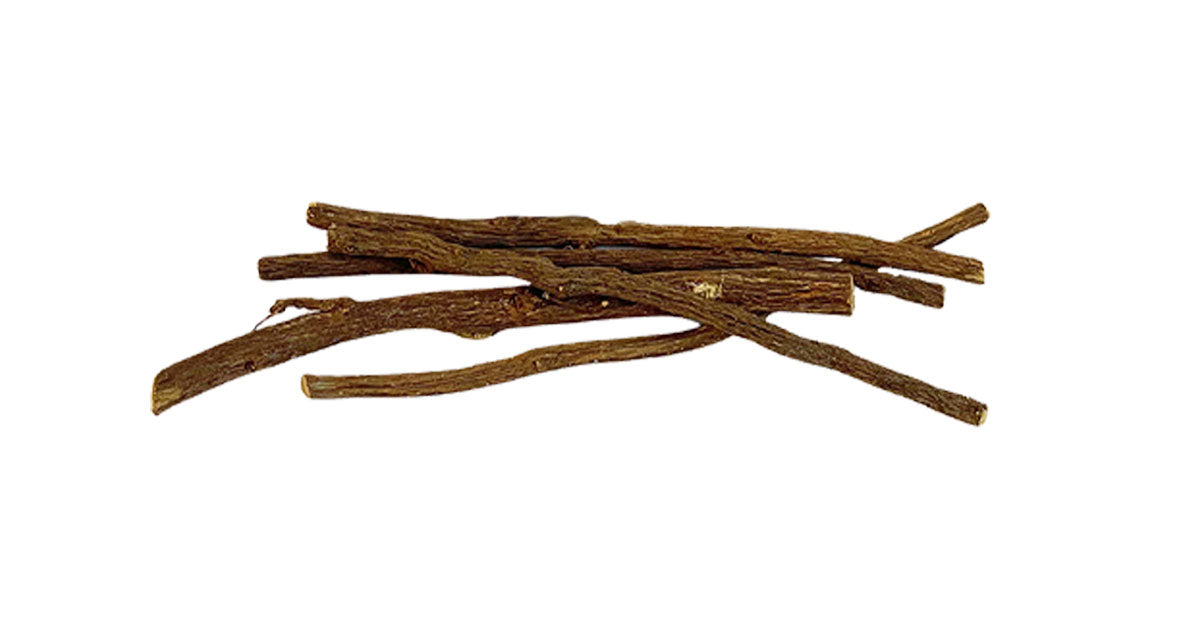
Licorice roots are just that - the root of the licorice plant. For over 100 years, they were sold in penny candy stores, enjoyed for the spicy flavor that soon morphs into the familiar licorice taste. When chewed, the fiber splays, much like a little broom, making the chewing experience an adventure. When the end is thin and bare, just break it off and start again.
Comes with a label telling the story of the root. Perfect for anyone who loves a natural snack, appreciates history, or wants to explore the many uses of licorice! Love licorice? Then you'll love our Licorice Lovers' Timeline Box. And of course, in a healthful cup of Licorice Tea. Want to learn more about licorice. Find it in Susan's books "Sweet as Sin" and "Fun Food of America".
Product Details
Product Details
Size: Whole Licorice Roots in a 5x6" bag
Ingredient: Whole Licorice Root
Allergen Disclaimer: Please note that our products are made in a facility that processes peanuts, tree nuts, dairy, soy, and wheat. While we take precautions to prevent cross-contamination, we cannot guarantee that our products are allergen-free.
Historical Insights
Historical Insights
The “Who Knew” of Licorice Root
When John Josselyn brought the licorice plant to Boston from England in the sixteenth century, he described it as a “precious herb." He shared the licorice root with Native Americans as a fermented licorice drink that was a curative for colds and a root to chew so clean the teeth. The Blackfoot Indians later used the root to cure earaches.
As for the plant: licorice is an amiable plant that prefers sun but can handle shade and dies back in the fall so it’s not affected by frost. Like Native Americans, European Americans considered licorice medicinal, used for everything from a diuretic to a cure for respiratory ailments. Post Civil War, American plantation owners of the South had another use of licorice in mind. Licorice was an important flavoring for tobacco. In fact, by 1876, three-fourths of all licorice entering the country was not for candy or tea but for tobacco.
One article published in 1888 explained: “It may be surprising to know that the United States uses annually 20,000,000 pounds of licorice in her tobacco factories…Besides what is used in tobacco factories, the article is largely used for other purposes. This country annually pays out about 7,000,000--a big sum that would be at home if farmers would only grow the plant.” The article went on to state how easy the plant is to grow, harvest and sell but to no avail. Licorice growing remained a cottage industry.
So why didn’t licorice take off as an American crop? Southern farmers needed literal seed money to grow the crops. And the Northerners, who help the purse strings, weren’t about to help. And so…we enjoy licorice as a candy, we chew the root for fun, and we enjoy licorice tea…most of it grown somewhere else.
Shipping
Shipping
📩 Check Your Email for the Tracking Number! 📩
📢 B2B orders may take longer to ship than estimated
Please allow 3-5 business days for processing new retail orders. Many of our products are hand-made and assembled, so some orders may experience some delays depending on availability. Most orders are shipped within 5 business days. If you have any questions or concerns about your order please reach out to us.

Licorice: The Legendary Candy with Medical Roots
The “Who Knew” of Licorice Root When John Josselyn brought the licorice plant to Boston from England in the sixteenth century, he described it as a “precious herbs. He shared the root with Native Americans as a fermented licorice drink that was a curative for colds and a root to chew so clean the teeth. The Blackfoot Indians later used the root to cure earaches. As for the plant: licorice is an amiable plant that prefers sun but can handle shade and dies back in the fall so it’s not affected by frost. Like Native Americans, European Americans considered licorice medicinal, used for everything from a diuretic to a cure for respiratory ailments. Post Civil War, American plantation owners of the South had another use of licorice in mind. Licorice was an important flavoring for tobacco. In fact, by 1876, three-fourths of all licorice entering the country was not for candy or tea but for tobacco. One article published in 1888 explained: “It may be surprising to know that the United States uses annually 20,000,000 pounds of licorice in her tobacco factories…Besides what is used in tobacco factories, the article is largely used for other purposes. This country annually pays out about 7,000,000--a big sum that would be at home if farmers would only grow the plant.” The article went on to state how easy the plant is to grow, harvest and sell but to no avail. Licorice growing remained a cottage industry. So why didn’t licorice take off as an American crop? Southern farmers needed literal seed money to grow the crops. And the Northerners, who help the purse strings, weren’t about to help. And so…we enjoy licorice as a candy, we chew the root for fun, and we enjoy licorice tea…most of it grown somewhere else.
The Sweet Journey Through Time Starts Here!
True Treats is the only historically accurate candy store in the world, bringing the past to life through researched sweets, teas, syrups, and more. Every product is rooted in history, telling the story of how people from all walks of life enjoyed treats through time. Leading this effort is Susan, a nationally recognized candy historian, researcher, and author who appears regularly on TV, radio, and in major publications. With over 40 years of experience, she has written ten books and founded True Treats to share the fascinating history of candy in a fun and delicious way. Susan’s work uncovers the surprising origins of America’s favorite sweets, from ancient uses of sugar to the candies of the 1900s. Through True Treats, Susan makes history an interactive experience, allowing customers to taste the past while learning the stories behind every bite.


