

Hand-Pulled Original Candy Cane
Hand-Pulled Original Candy Cane
SKU:400000024370
Couldn't load pickup availability
DESCRIPTION
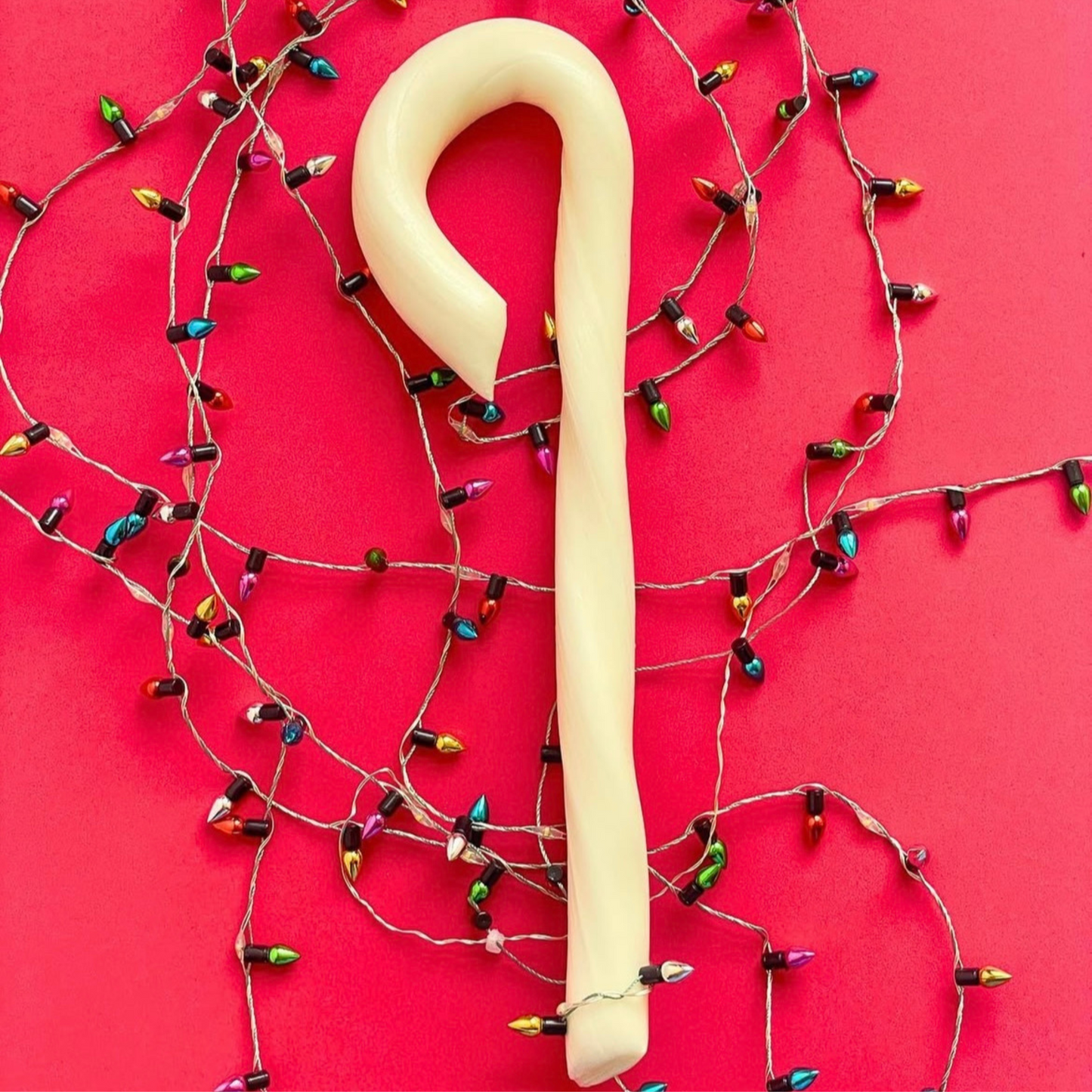
MADE JUST FOR TRUE TREATS! This hand-pulled candy cane is as close to the original as you can get. The shape is clearly handmade, none of the machine-made cookie-cutter cane. The color is white - the original color of sticks before the decorative stripe appeared at the turn-of-century. The candy cane is crisp and minty flavored. Was mint the original flavor? That piece of history is hard to know. But one thing is certain, you'll love this unique treat and so will anyone else. Story is on a keepsake tag.
Product Details
Product Details
Allergen Disclaimer: Please note that our products are made in a facility that processes peanuts, tree nuts, dairy, soy, and wheat. While we take precautions to prevent cross-contamination, we cannot guarantee that our products are allergen-free.
Historical Insights
Historical Insights
Lots of stories swirl around about the candy cane: the white base color of the candy cane symbolizes Jesus’ purity; the red stripes symbolize Jesus’ blood
when he died on the cross; and the J shape was chosen to represent the J in Jesus. Then there’s the thinking that Christians passed the candy cane as a secret handshake acknowledging they were Christian to avert prosecution. Actually, most candy sticks and canes were white up until the early 1900s. The red stripe came later, a common late-19th century color; and the J had more to do with a hook necessary to hang it from the tree. As for the secret handshake: the candy cane is thought to have originated in Germany, which, in fact, was Christian, so why be secretive?
One thing we do know is that Bob McCormack put candy canes in households everywhere. McCormack started making candy canes in the 1920s and by the late
1950s would become one of the world’s largest peppermint candy cane producers, selling about a half a million candy canes per day at their peak.
And, to sweeten the story, a priest was involved in McCormack’s success. That priest was Father
Gregory Keller and he invented the Keller Machine that automatically put the crook in the candy cane. Before this, confectioners had to bend the cane manually
when it was still warm and soft, using a wooden mold or the like. The work was difficult, time-consuming and probably tedious.
It also happens that Father Keller was the brother-in-law of the aforementioned Bob McCormack. Not only did McCormack have to deal with the pain stacking production process of candy cane making, but 22% of the candy canes broke during the bending process and were headed for the trash. Keller’s machine automated this process and shortly thereafter was perfected by Dick
Driskell and Jimmy Spratling, both of whom worked for Bob.
So, while we at True Treats love our original candy canes, we thank Bob and his family for bringing candy canes to everyone.
Shipping
Shipping
📩 Check Your Email for the Tracking Number! 📩
📢 B2B orders may take longer to ship than estimated
Please allow 3-5 business days for processing new retail orders. Many of our products are hand-made and assembled, so some orders may experience some delays depending on availability. Most orders are shipped within 5 business days. If you have any questions or concerns about your order please reach out to us.

The Sweet Journey Through Time Starts Here!
True Treats is the only historically accurate candy store in the world, bringing the past to life through researched sweets, teas, syrups, and more. Every product is rooted in history, telling the story of how people from all walks of life enjoyed treats through time. Leading this effort is Susan, a nationally recognized candy historian, researcher, and author who appears regularly on TV, radio, and in major publications. With over 40 years of experience, she has written ten books and founded True Treats to share the fascinating history of candy in a fun and delicious way. Susan’s work uncovers the surprising origins of America’s favorite sweets, from ancient uses of sugar to the candies of the 1900s. Through True Treats, Susan makes history an interactive experience, allowing customers to taste the past while learning the stories behind every bite.


