
Caramel Love
Caramel Love
SKU:400000031002
Couldn't load pickup availability
DESCRIPTION
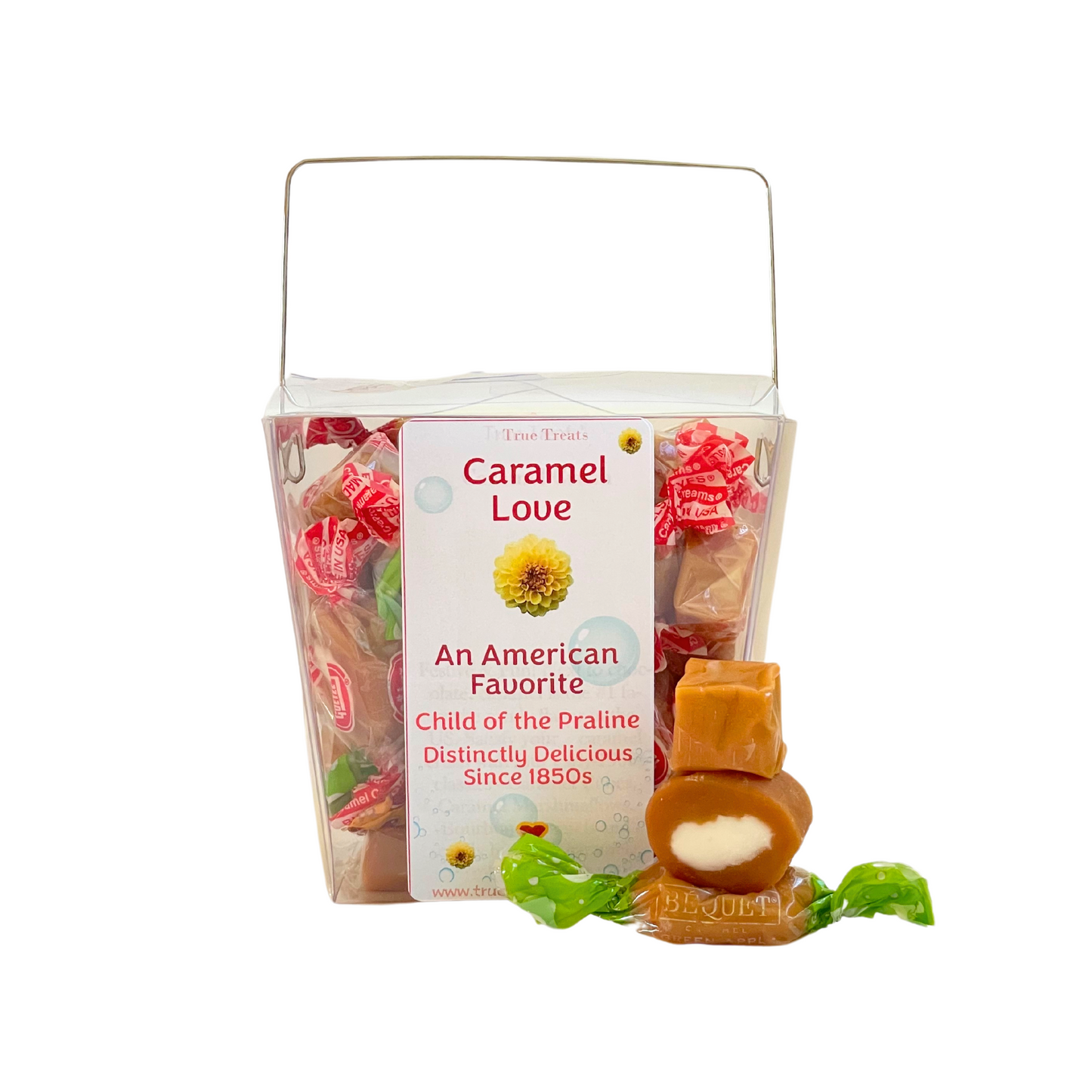
Caramel Love is a caramel lover's dream. One full pound of caramels in all shapes and sizes. They include the old time Caramel Creams, retro caramel cubes, French Beque Caramels in a variety of flavors including Butterscotch, Chocolate, Sea Salt, Classic Vanilla, small batch American made stick caramels… and a few surprises! All are individually wrapped and held in a fun and festive take-out box, great for sharing at home, at parties, or at work or kept safe and secure at home for pick-me-up satisfaction.
Product Details
Product Details
Size: A pound of caramels in a 3 1/8x 2 5/8x 4" container
Brown Sugar, Tapioca Syrup, Heavy Cream, Butter, (Chocolate and Salted Mocha , Caramel contain Unsweetened Chocolate), Fructose, Milk, Sugar, Natural Flavor, (All Salt Caramel contain Sea Salt), Sunflower oil, egg whites, Modified soy protein,
Allergen Disclaimer: Please note that our products are made in a facility that processes peanuts, tree nuts, dairy, soy, and wheat. While we take precautions to prevent cross-contamination, we cannot guarantee that our products are allergen-free.
Historical Insights
Historical Insights
No surprise, caramel is among the nation’s favorite candy. And why shouldn’t it be? It’s as American as Hershey, versatile as U.S. history, and amiable regardless of companion. Warm weather or cold, breakfast or late-night snack, American born and raised, caramel works.
Like most Americans, the luscious caramel descended from immigrants, in this case the French. The caramel wasn’t its own candy yet, but caramelized sugar found in such sweets as the praline. It was popularized by Lassagne, chef de bouche to Compte du Plessis-Praslin, minister to Louis XIII and Louis XIV. Upon retiring, Lassagne opened the first praline shop in 1630. It’s still open today. Almost 100 years later, the French brought the praline to New Orleans.
It wasn’t until the late 1800s that the true maturation of caramelized sugar into caramel candy occurred in the U.S. One early caramel maker was Pennsylvania native, Milton Hershey, after decades of financial ruin in the confectionary world, Hershey found success in 1886 with the Lancaster Caramel Company. The ever-versatile caramel appeared as the Cream Caramel, with a luscious cream center, caramel-covered marshmallows, and caramel cubes.
Caramel soon collaborated with other confections, in such new creations as the “combination” aka “candy” bar. The Goo Goo Cluster, a Nashville native, was among the first, made in 1912, followed by war-time rations such as the Peanut Chew in 1917. Throughout the Depression, candy bars with caramel remained a favorite. One reason: caramel was inexpensive compared to chocolate and able to give candy bars heft - tasty and profitable.
Caramel remains an American favorite today, entering everything from cereals and cookies to lavish cakes…and candies! Plenty of variety to go around – who knows what’s ahead!
Shipping
Shipping
📩 Check Your Email for the Tracking Number! 📩
📢 B2B orders may take longer to ship than estimated
Please allow 3-5 business days for processing new retail orders. Many of our products are hand-made and assembled, so some orders may experience some delays depending on availability. Most orders are shipped within 5 business days. If you have any questions or concerns about your order please reach out to us.
No surprise, caramel is among the nation’s favorite candy. And why shouldn’t it be? It’s as American as Hershey, versatile as U.S. history, and amiable regardless of companion. Warm weather or cold, breakfast or late-night snack, American born and raised, caramel works. Like most Americans, the luscious caramel descended from immigrants, in this case the French. The caramel wasn’t its own candy yet, but caramelized sugar found in such sweets as the praline. It was popularized by Lassagne, chef de bouche to Compte du Plessis-Praslin, minister to Louis XIII and Louis XIV. Upon retiring, Lassagne opened the first praline shop in 1630. It’s still open today. Almost 100 years later, the French brought the praline to New Orleans. It wasn’t until the late 1800s that the true maturation of caramelized sugar into caramel candy occurred in the U.S. One early caramel maker was Pennsylvania native, Milton Hershey, after decades of financial ruin in the confectionary world, Hershey found success in 1886 with the Lancaster Caramel Company. The ever-versatile caramel appeared as the Cream Caramel, with a luscious cream center, caramel-covered marshmallows, and caramel cubes. Caramel soon collaborated with other confections, in such new creations as the “combination” aka “candy” bar. The Goo Goo Cluster, a Nashville native, was among the first, made in 1912, followed by war-time rations such as the Peanut Chew in 1917. Throughout the Depression, candy bars with caramel remained a favorite. One reason: caramel was inexpensive compared to chocolate and able to give candy bars heft - tasty and profitable. Caramel remains an American favorite today, entering everything from cereals and cookies to lavish cakes…and candies! Plenty of variety to go around – who knows what’s ahead!
The Sweet Journey Through Time Starts Here!
True Treats is the only historically accurate candy store in the world, bringing the past to life through researched sweets, teas, syrups, and more. Every product is rooted in history, telling the story of how people from all walks of life enjoyed treats through time. Leading this effort is Susan, a nationally recognized candy historian, researcher, and author who appears regularly on TV, radio, and in major publications. With over 40 years of experience, she has written ten books and founded True Treats to share the fascinating history of candy in a fun and delicious way. Susan’s work uncovers the surprising origins of America’s favorite sweets, from ancient uses of sugar to the candies of the 1900s. Through True Treats, Susan makes history an interactive experience, allowing customers to taste the past while learning the stories behind every bite.


