


Candied orange peels
Candied orange peels
SKU:
Couldn't load pickup availability
DESCRIPTION
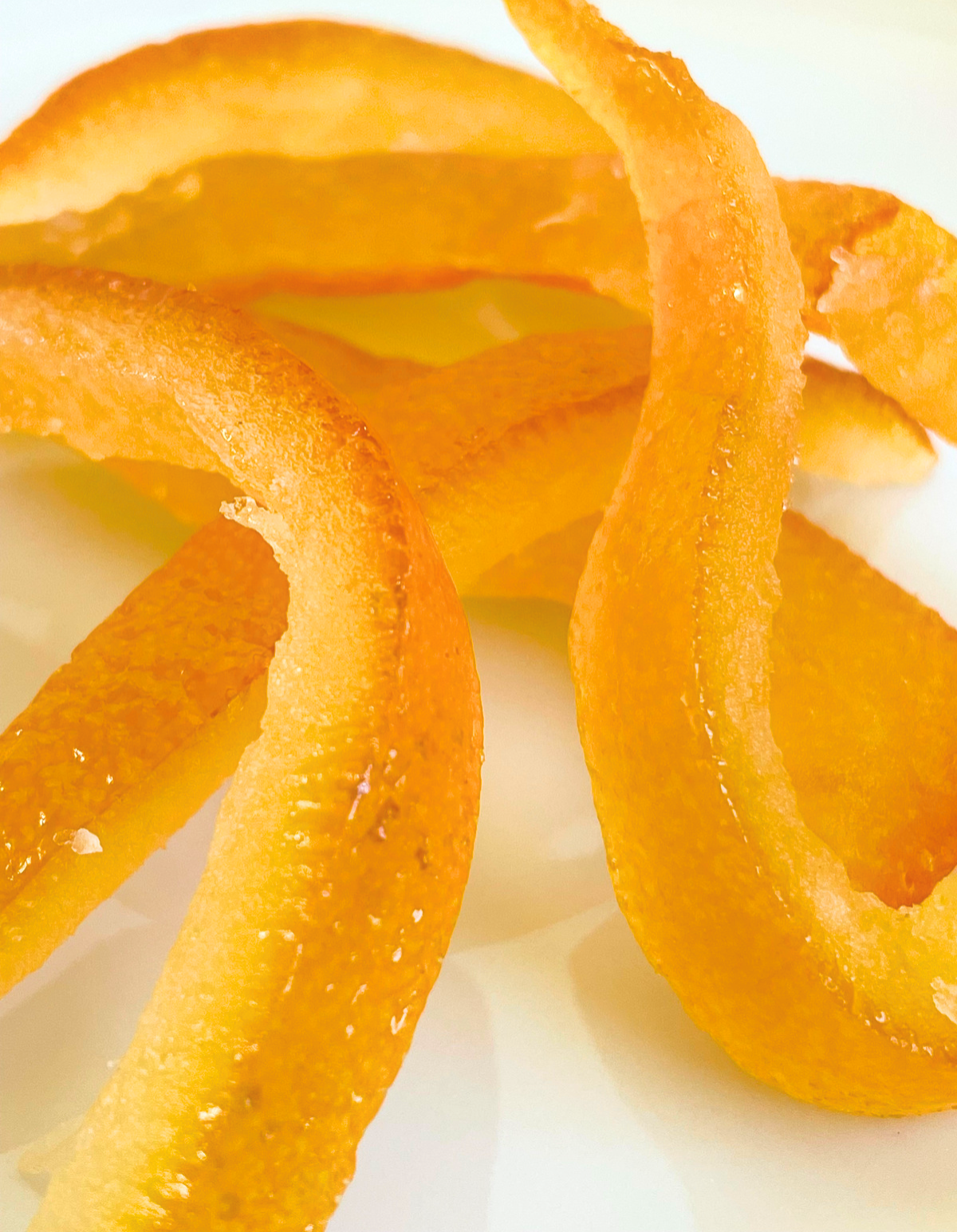
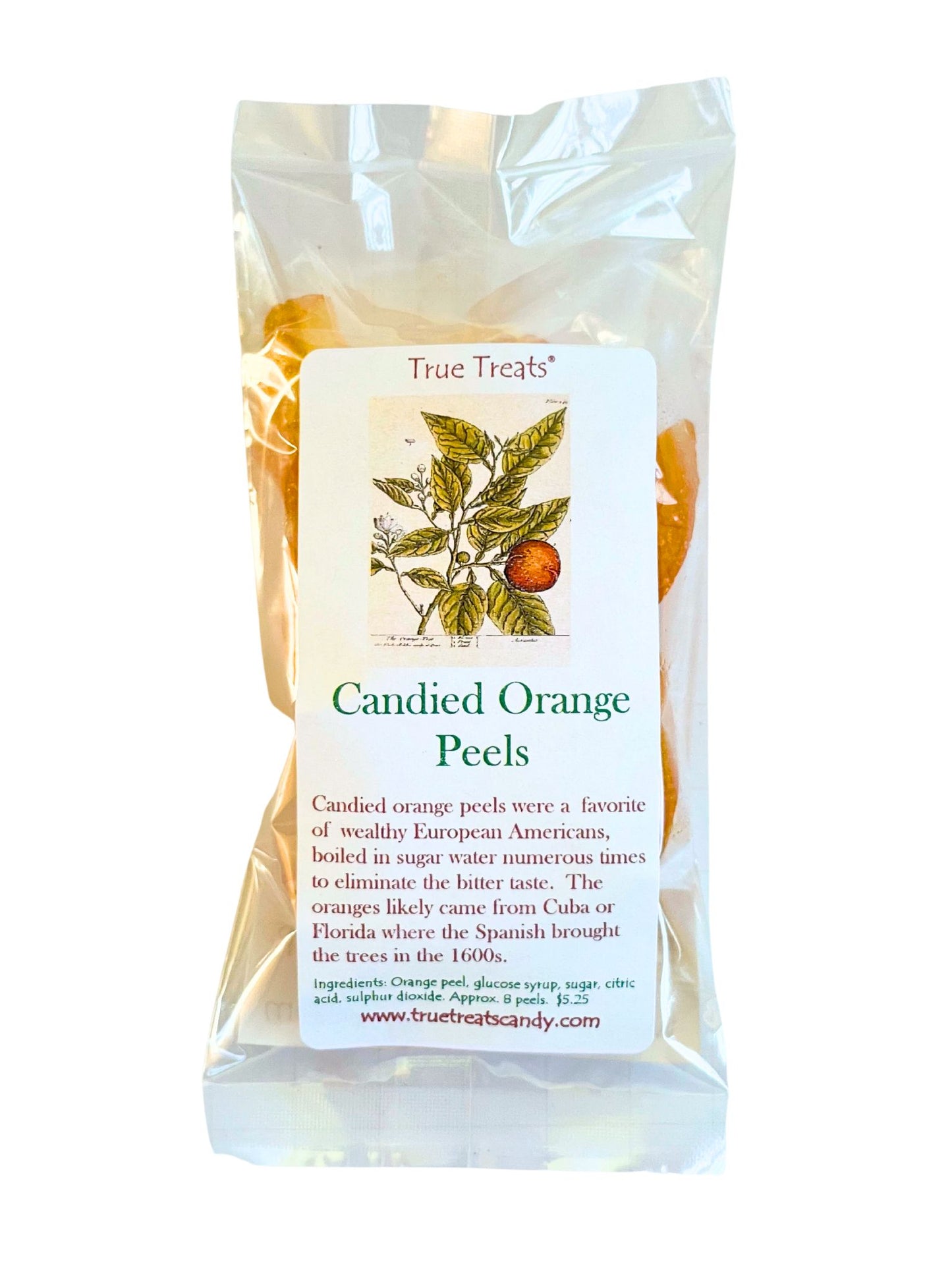
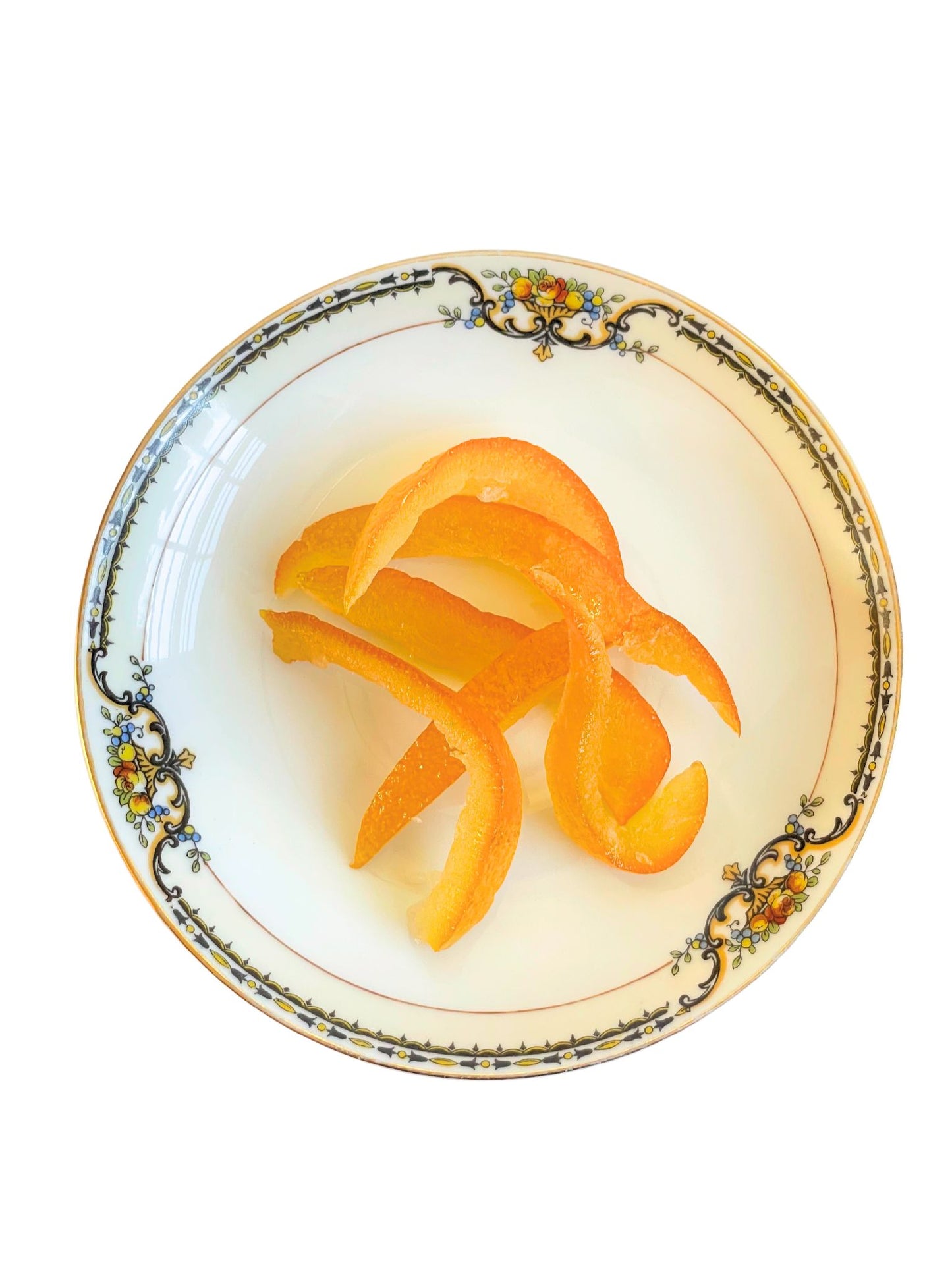
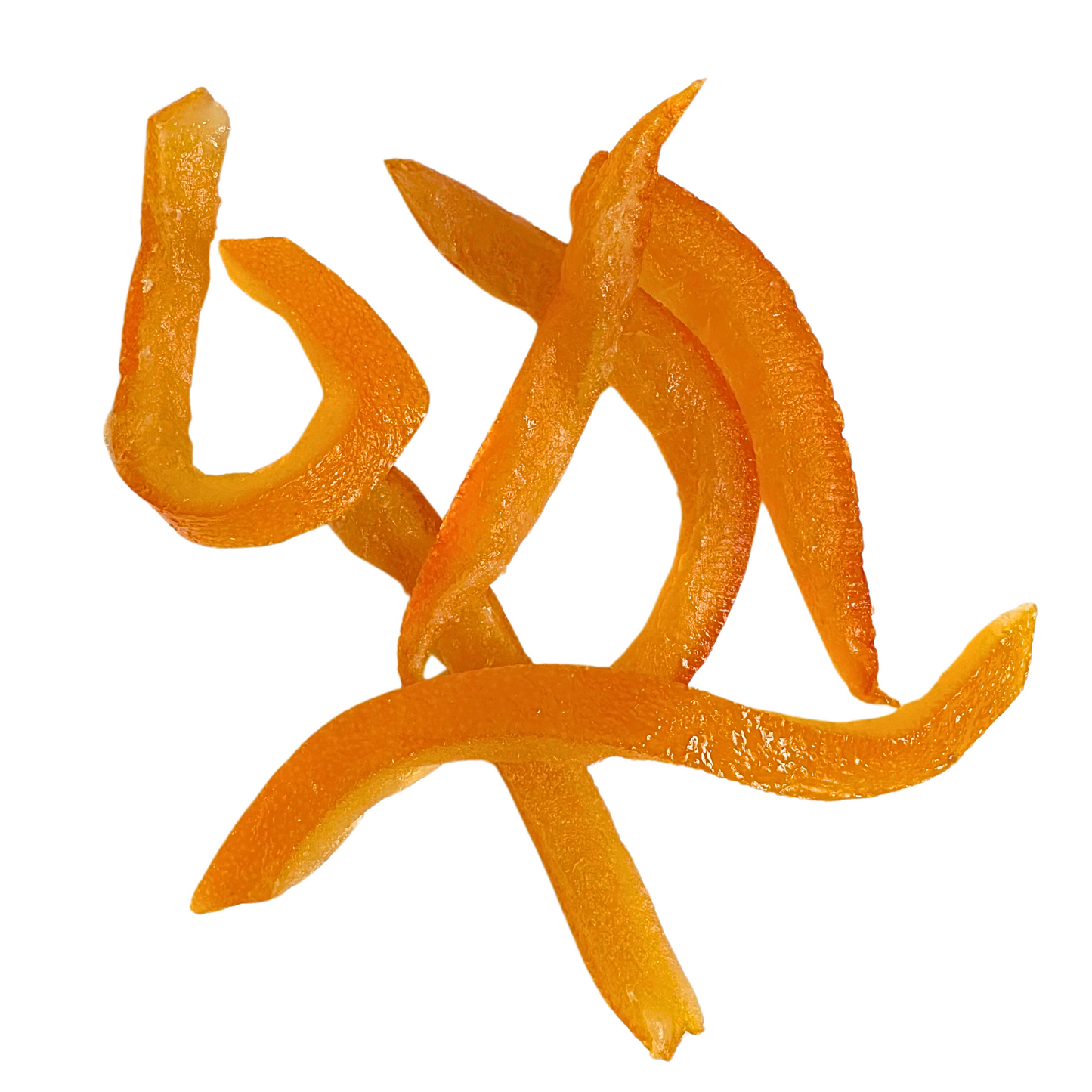
Citrus peels have a bitter flavor that pairs well with sweet flavors, especially sugar. The texture is soft and chewy, enjoyed as a candy unto themselves, especially for those who crave bitter sweets. But candied, aka glacé, peels are also enjoyed mixed in fruit salads, in and atop baked goods, most famously fruit cake. But don’t stop there. Candied peels give zing to cocktails and give punch to fruit and nut mixes. BEST OF ALL: Candied peels are part of the traditional BRIDE’S cake…the best wedding cake of all! Comes with the history on the label and period illustration, for a true taste of the times!
Product Details
Product Details
Orange Peel Strip, Glucose Syrup, Sugar, Citric Acid, Potassium Sorbate, Sulphur Dioxide
Allergen Disclaimer: Please note that our products are made in a facility that processes peanuts, tree nuts, dairy, soy, and wheat. While we take precautions to prevent cross-contamination, we cannot guarantee that our products are allergen-free.
Historical Insights
Historical Insights
Candied or glacé fruit such as these candied orange peels have been around since the 14th century. To make glacé fruits take a whole fruit, small pieces of fruit, or even pieces of peel, and drop them into heated sugar syrup. The sugar actually absorbs the moisture from the fruit, which acts as a preservative while creating a sweet, glistening result.
Today, glacé fruits are enjoyed in many wonderful iterations. They are dipped in chocolate or strewn atop cakes for decorative purposes while still maintaining their identity as candy. They also appear in cocktails, although may be confused with a similar cherry, the Maraschino Cherries, which is cured in syrup, rather than cooked.
Above all, glacé fruits are a formidable presence in such foods as fruit cake. Their presence gives us insight into the genesis of today’s glacé . The cake’s primary attribute was its durability. The oldest fruitcake on record, roughly 4,176 years ago. Fruit cakes made of pomegranate seeds, pine nuts, raisins, barley mash, honeyed wine, amongst others were used in burials as sustenance for the dead and by Roman soldiers who carried them, unscathed, into battle. During the Crusades, knights used fruitcakes made of stale bread, honey, spices, dried fruit, and mead to get through the month’s-long trek to the Holy Land. Today’s glistening fruit began around the 14th century with glacé - fruits heated in sugar syrup, which doubled as a preservative and tasty treat.
By the 1800s, a typical fruit cake was chockfull of citrus peel, pineapples, plums, dates, pears, and cherries, all drenched in sugar, sugar, sugar. Fruit cake seeped into the Victorian Christmas rituals, as well, which became the seeds of today’s American Christmas events.
Shipping
Shipping
📩 Check Your Email for the Tracking Number! 📩
📢 B2B orders may take longer to ship than estimated
Please allow 3-5 business days for processing new retail orders. Many of our products are hand-made and assembled, so some orders may experience some delays depending on availability. Most orders are shipped within 5 business days. If you have any questions or concerns about your order please reach out to us.
Candied Citrus Peels: A Sweet Tradition from the Past
Throughout the eighteenth and nineteenth centuries orange, and, for that matter, lemons were confections in their own right, particularly the peel. Martha Washington’s cookbook contains a recipe for sugared peels that were boiled repeatedly until the bitterness was more or less knocked out of them and a sugary coating had formed. As a candy, peels are typically crystalized or candied into what is commonly called a “glace.” For more on the wonders of glacé fruits read on.
The Sweet Journey Through Time Starts Here!
True Treats is the only historically accurate candy store in the world, bringing the past to life through researched sweets, teas, syrups, and more. Every product is rooted in history, telling the story of how people from all walks of life enjoyed treats through time. Leading this effort is Susan, a nationally recognized candy historian, researcher, and author who appears regularly on TV, radio, and in major publications. With over 40 years of experience, she has written ten books and founded True Treats to share the fascinating history of candy in a fun and delicious way. Susan’s work uncovers the surprising origins of America’s favorite sweets, from ancient uses of sugar to the candies of the 1900s. Through True Treats, Susan makes history an interactive experience, allowing customers to taste the past while learning the stories behind every bite.


