


Historic Amaretti Almond Cookies - Original Recipe
Historic Amaretti Almond Cookies - Original Recipe
SKU:400000016412
Couldn't load pickup availability
DESCRIPTION
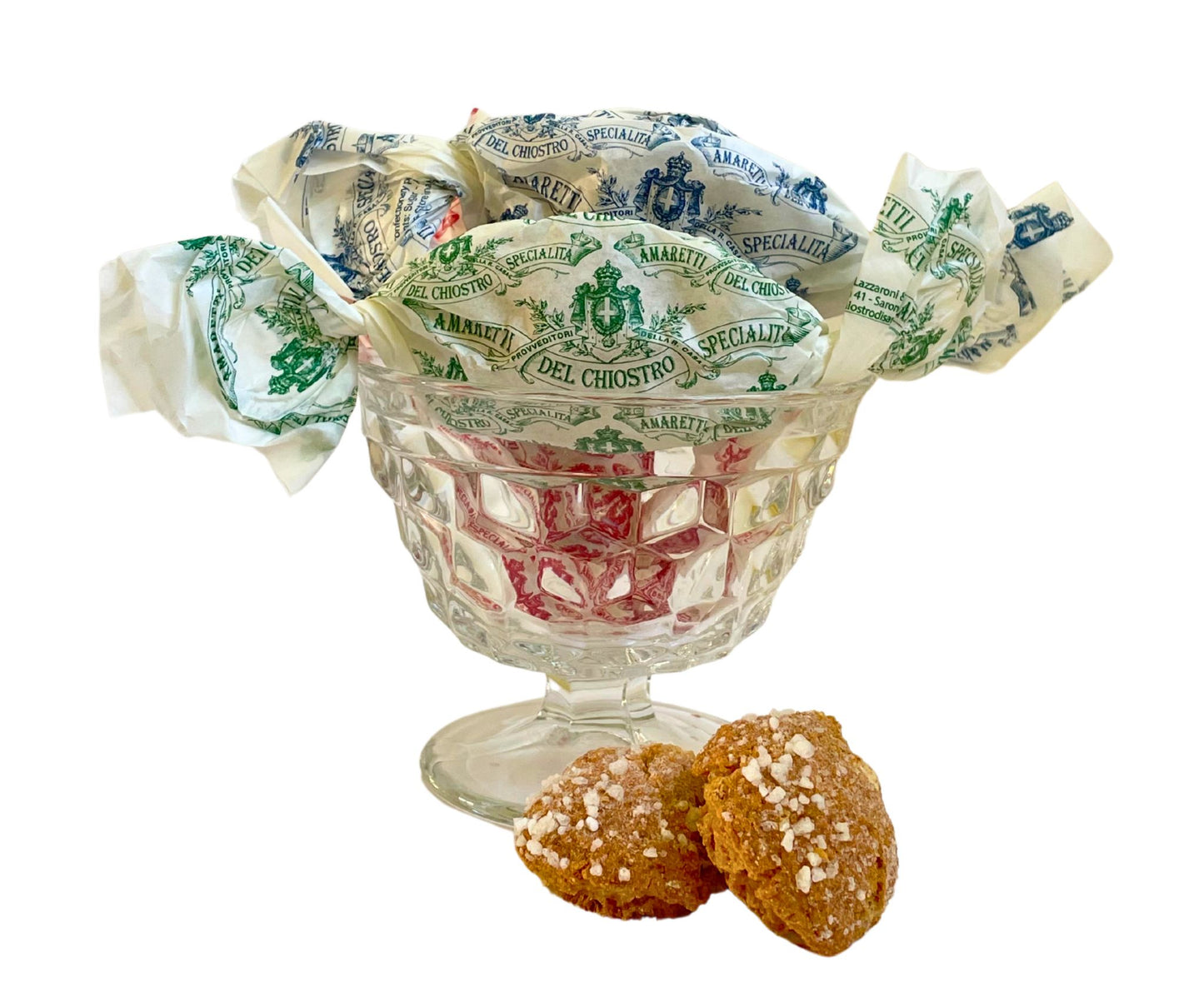
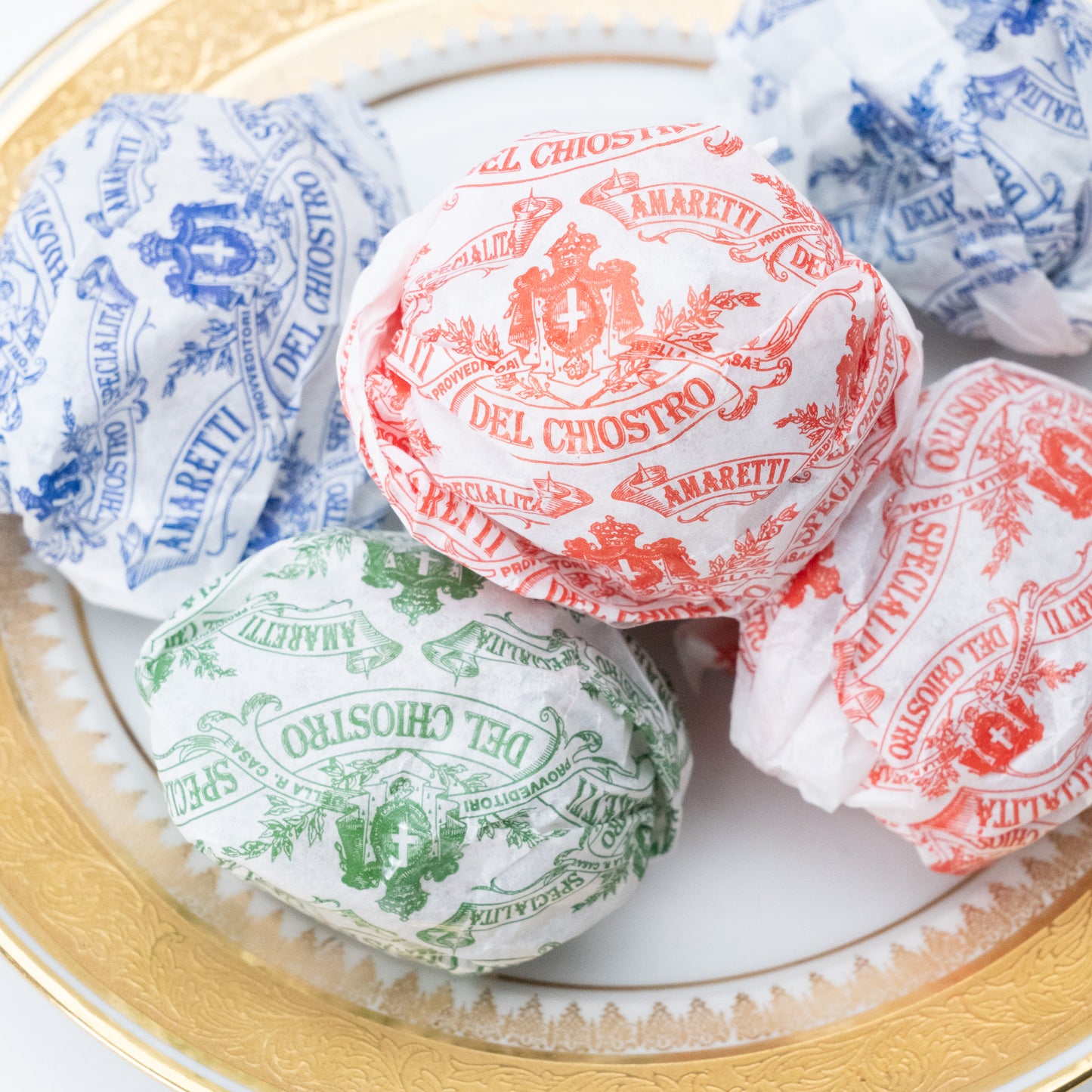
This crunchy, perfectly portioned tea biscuit stands out from the crowd. It is uniquely festive and has been for thirteen generations. Originally, two young lovers made the Amaretti cookie for festivities when the cardinal of Milan came to town. The recipe, still made by the couple's descendants 300 years later, is pure delight - apricot kernel, sugar, and egg whites. Even the wrapper is festive! Wrap it in a funnel, place it on a plate, and enjoy the joyous flame. If you’re outside - all the better! Light the paper on fire, throw it in the air, and watch as it falls.
What to learn more about the story of cookies? Biscuits? And teas? Get the scoop here or get the whole story of cookies and cakes in Susan's new book "Fun Foods of America."
Product Details
Product Details
Size: 6 cookies in a 4x8" bag
Sugar, Armeline (from apricot kernels) and Egg Whites
Allergen Disclaimer: Please note that our products are made in a facility that processes peanuts, tree nuts, dairy, soy, and wheat. While we take precautions to prevent cross-contamination, we cannot guarantee that our products are allergen-free.
Historical Insights
Historical Insights
The timeline of biscuit history is parallel to other sweets we might have at tea, such as cake. Both started in the Neolithic age as humans began cooking grains to make them easier to digest.
Later, the Romans made their own version of biscuits, called rusk, which was something like biscotti. These biscuits, used by the military and travelers on long treks, were later eaten by sailors in the Royal Navy in 1588 and by soldiers in the American Civil War. Called “hardtack,” these biscuits were baked four times for ultimate durability and were as enjoyable as eating rocks.The functional biscuit became the culinary biscuit around the fourteenth century, when both sweet and savory versions, including the wafer, appeared. The role of the newer biscuit was one-part pleasure, one-part digestive after a meal. In the seventeenth and eighteenth centuries, biscuits became ever more popular due to the increasing availability of cane sugar, and that, of course, was because of enslavement.
In the American South biscuits were particularly popular. Only one problem: baking soda and powder had yet to be invented and yeast was expensive, which meant the dough had to be beaten by hand with a mallet or rolling pin for over an hour. That difficult duty fell upon enslaved women—once enslavement ended, biscuits fell out of favor.
Biscuits did return, however, in the late 1800s, largely due to innovations of African-American chefs and caterers. One was Alexander Ashbourne, who was born enslaved in Philadelphia and, in 1875, applied for a patent on his invention—a spring-loaded biscuit cutter. By the late 1800s, as Queen Victoria’s teas became an American ritual and tea parties an American pleasure, biscuits were evolving. Their popularity grew in the 1900s to become a staple of most American kitchens. But, by then, biscuits already had a place on plates alongside teapots, where they remain today.16
Shipping
Shipping
📩 Check Your Email for the Tracking Number! 📩
📢 B2B orders may take longer to ship than estimated
Please allow 3-5 business days for processing new retail orders. Many of our products are hand-made and assembled, so some orders may experience some delays depending on availability. Most orders are shipped within 5 business days. If you have any questions or concerns about your order please reach out to us.



The timeline of biscuit history is parallel to other sweets we might have at tea, such as cake. Both started in the Neolithic age as humans began cooking grains to make them easier to digest. Later, the Romans made their own version of biscuits, called rusk, which was something like biscotti. These biscuits, used by the military and travelers on long treks, were later eaten by sailors in the Royal Navy in 1588 and by soldiers in the American Civil War. Called “hardtack,” these biscuits were baked four times for ultimate durability and were as enjoyable as eating rocks.The functional biscuit became the culinary biscuit around the fourteenth century, when both sweet and savory versions, including the wafer, appeared. The role of the newer biscuit was one-part pleasure, one-part digestive after a meal. In the seventeenth and eighteenth centuries, biscuits became ever more popular due to the increasing availability of cane sugar, and that, of course, was because of enslavement. In the American South biscuits were particularly popular. Only one problem: baking soda and powder had yet to be invented and yeast was expensive, which meant the dough had to be beaten by hand with a mallet or rolling pin for over an hour. That difficult duty fell upon enslaved women—once enslavement ended, biscuits fell out of favor. Biscuits did return, however, in the late 1800s, largely due to innovations of African-American chefs and caterers. One was Alexander Ashbourne, who was born enslaved in Philadelphia and, in 1875, applied for a patent on his invention—a spring-loaded biscuit cutter. By the late 1800s, as Queen Victoria’s teas became an American ritual and tea parties an American pleasure, biscuits were evolving. Their popularity grew in the 1900s to become a staple of most American kitchens. But, by then, biscuits already had a place on plates alongside teapots, where they remain today.16
The Sweet Journey Through Time Starts Here!
True Treats is the only historically accurate candy store in the world, bringing the past to life through researched sweets, teas, syrups, and more. Every product is rooted in history, telling the story of how people from all walks of life enjoyed treats through time. Leading this effort is Susan, a nationally recognized candy historian, researcher, and author who appears regularly on TV, radio, and in major publications. With over 40 years of experience, she has written ten books and founded True Treats to share the fascinating history of candy in a fun and delicious way. Susan’s work uncovers the surprising origins of America’s favorite sweets, from ancient uses of sugar to the candies of the 1900s. Through True Treats, Susan makes history an interactive experience, allowing customers to taste the past while learning the stories behind every bite.


