
Abolitionist Sugar Sampler Box
Abolitionist Sugar Sampler Box
SKU:400000016290
Couldn't load pickup availability
DESCRIPTION
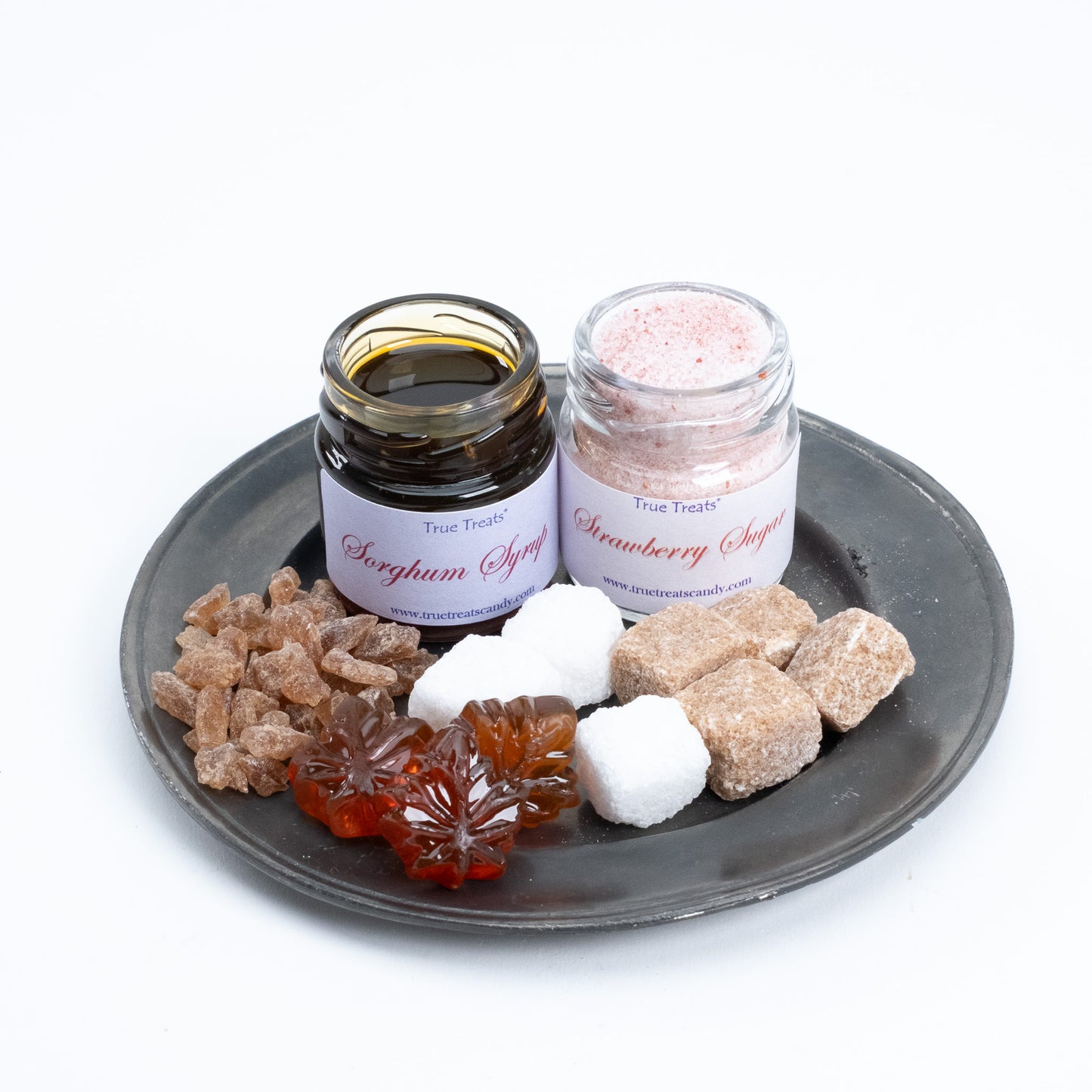
A collection of the sugars that shaped American food history, each with its own relationship to enslavement. There’s cane sugar – white and brown. These uneven pieces reflect those cut with “nippers” when sugar came in hard uncut cones. As cane sugar was so integral in the economy of enslaving others, abolitionists in the “Free Produce Movement” found alternatives. One was relatively unprocessed beet sugar crystals, with a rich flavor and beautiful crystal form. There’s sorghum, from the sorghum grain that arrived with enslaved workers and was boiled into a sweet molasses, and honey, created by another newcomer to the North American landscape – the Honey Bee. And sweeteners were native to North America, such as maple, here in boiled form, and sugar from berries – both used by Native Americans for legends of time. A true taste of American sugars that shaped the foods of today. ALL NATURAL! Delightful and Important!
Product Details
Product Details
Allergen Disclaimer: Please note that our products are made in a facility that processes peanuts, tree nuts, dairy, soy, and wheat. While we take precautions to prevent cross-contamination, we cannot guarantee that our products are allergen-free.
Historical Insights
Historical Insights
Honey, beet sugar “free produce movement.” As the name implies, this movement, primarily started by female Quakers in the early 1800s, promoted food and fabrics not made by enslaved workers. In 1830, the Quakers launched a Free Produce
Association in Philadelphia and, soon after, women of the African American community formed the Colored Female Free Produce Society of Philadelphia.
Among other initiatives, the African American women encouraged “colored capitalists” to buy from Free Produce stores. An African American publication, Freedom’s Journal, carried an article indicating that every twenty-five people who used cane sugar found work for one slave. The women activists dispersed recipes that replaced cane sugar with free produce – frequently honey.
Honey could never be mass-produced, so it never took off to the degree of sugar beet and sugar cane, other Free Produce sugars. Its history as a new-comer to the nation is long-forgotten and much of today’s commercial honey is imported from China. Home beekeepers have created an interesting cottage industry, helping
the immigrant bee, and its honey, survive.
Shipping
Shipping
📩 Check Your Email for the Tracking Number! 📩
📢 B2B orders may take longer to ship than estimated
Please allow 3-5 business days for processing new retail orders. Many of our products are hand-made and assembled, so some orders may experience some delays depending on availability. Most orders are shipped within 5 business days. If you have any questions or concerns about your order please reach out to us.
The Sweet Journey Through Time Starts Here!
True Treats is the only historically accurate candy store in the world, bringing the past to life through researched sweets, teas, syrups, and more. Every product is rooted in history, telling the story of how people from all walks of life enjoyed treats through time. Leading this effort is Susan, a nationally recognized candy historian, researcher, and author who appears regularly on TV, radio, and in major publications. With over 40 years of experience, she has written ten books and founded True Treats to share the fascinating history of candy in a fun and delicious way. Susan’s work uncovers the surprising origins of America’s favorite sweets, from ancient uses of sugar to the candies of the 1900s. Through True Treats, Susan makes history an interactive experience, allowing customers to taste the past while learning the stories behind every bite.


