[{"id":291189227562,"handle":"all-candy","updated_at":"2025-12-04T08:57:59-05:00","published_at":"2025-01-30T08:34:32-05:00","sort_order":"best-selling","template_suffix":"","published_scope":"global","title":"All Old Fashioned Candies","body_html":""},{"id":286636113962,"handle":"christmas-delights","updated_at":"2025-12-04T07:14:55-05:00","published_at":"2024-10-31T13:15:22-04:00","sort_order":"manual","template_suffix":"","published_scope":"global","title":"Christmas Candies","body_html":"","image":{"created_at":"2024-10-31T13:15:19-04:00","alt":"","width":2048,"height":2030,"src":"\/\/truetreatscandy.com\/cdn\/shop\/collections\/IMG-7261.jpg?v=1762880171"}},{"id":290043822122,"handle":"quick-order","title":"Quick Order","updated_at":"2025-12-04T12:51:50-05:00","body_html":null,"published_at":"2025-01-03T14:49:08-05:00","sort_order":"best-selling","template_suffix":"quick","disjunctive":false,"rules":[{"column":"variant_price","relation":"greater_than","condition":"0"}],"published_scope":"web"},{"id":285115416618,"handle":"1500s-1700s","updated_at":"2025-12-04T07:14:55-05:00","published_at":"2024-09-19T11:36:22-04:00","sort_order":"manual","template_suffix":"","published_scope":"web","title":"Retro 1500s to 1700s Candy Collections","body_html":"\u003ch5\u003eCandied Peels and petals, chocolate sticks, sugar plums, \u0026amp; other sugary treats.\u003c\/h5\u003e\r\nMany common fruits, nuts, and spices arrived in the 1500s to the 1700s and brought with them new forms of confections...and all the symbolism that went with them.","image":{"created_at":"2024-09-19T11:38:22-04:00","alt":null,"width":983,"height":888,"src":"\/\/truetreatscandy.com\/cdn\/shop\/collections\/2376410629-1_7843d4e5-e79c-4bd6-a69b-3e5798613592.jpg?v=1726760302"}},{"id":285115449386,"handle":"1800s","updated_at":"2025-12-04T20:04:24-05:00","published_at":"2024-09-19T11:36:25-04:00","sort_order":"manual","template_suffix":"depict","published_scope":"web","title":"Retro 1800s Candy Collections","body_html":"\u003ch5\u003eThe Industrial Revolution brought a tidal wave of change in sweets.\u003c\/h5\u003e\r\nThe 1800s saw the growth and demolition of enslavement with its close connection to sugar cane; the introduction of new sugars promoted by abolitionist; and the massive shifts in foods due to the Industrial Revolution, including the candy we know today.","image":{"created_at":"2024-09-19T11:38:25-04:00","alt":null,"width":1735,"height":2048,"src":"\/\/truetreatscandy.com\/cdn\/shop\/collections\/Untitled-design-2024-02-07T163445-582_e10ae7ea-2a45-4424-8199-cfe5833ac1db.jpg?v=1726760305"}}]
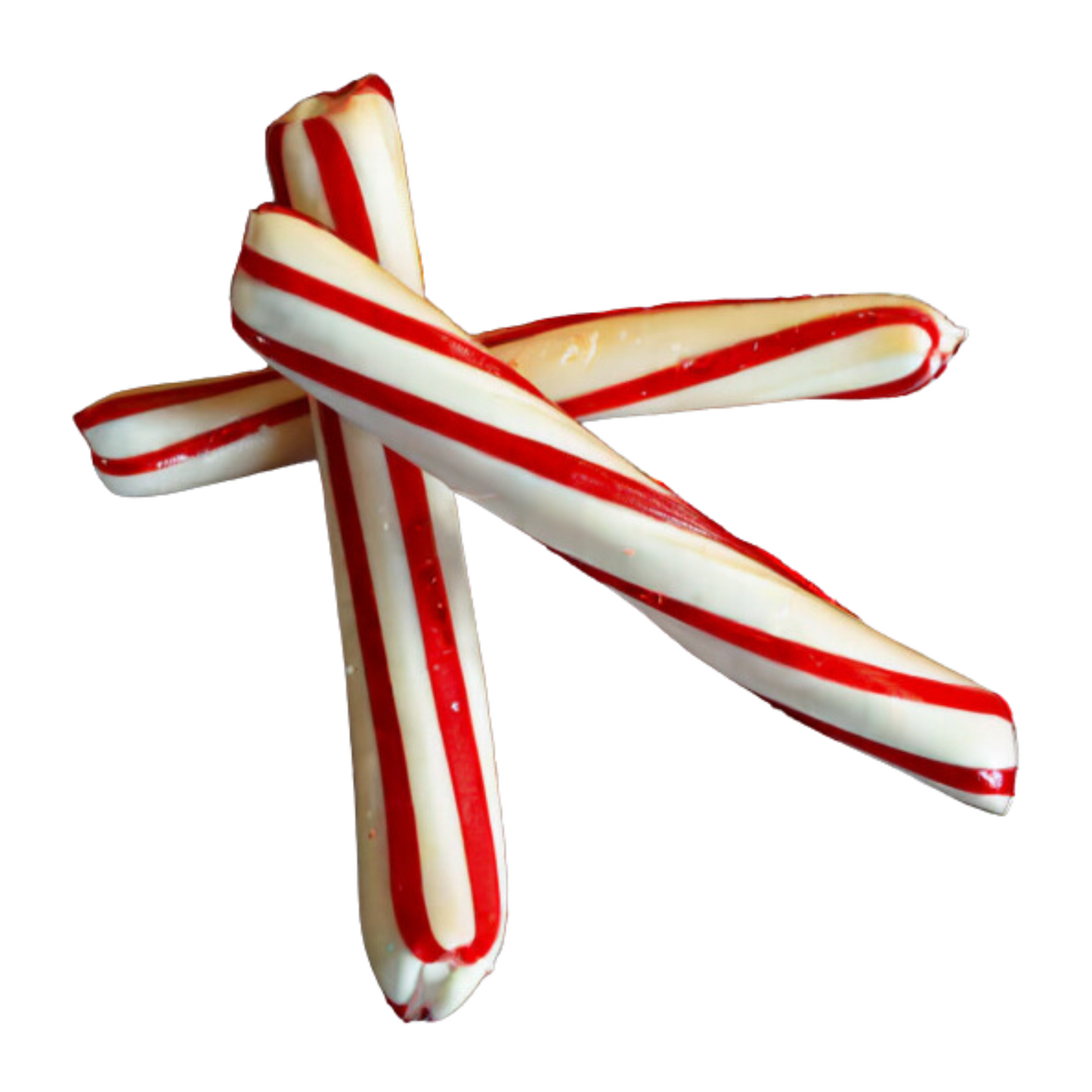
Get it NOW! Can only be made in the cool weather! A hand-pulled stick, this candy has a light porous texture with a soft peppermint taste. An early style of candy cane, between 4 and 6 inches - although some were well over a foot. A great gift and hard-to-find. Comes with a tag with an old-time image on the front and the history on the back...PLUS an old time Christmas postcard.
Product Details
Allergen Disclaimer: Please note that our products are made in a facility that processes peanuts, tree nuts, dairy, soy, and wheat. While we take precautions to prevent cross-contamination, we cannot guarantee that our products are allergen-free.
Historical Insights
You know those old-timey shops with faux wicker baskets, faux 19th century aprons, and old time-esq candles with a really, really sweet smell. There, you will find the “old-time” candy sticks, brightly colored, hard-textured and as industrial as a sledgehammer but with greater appeal to kids.
The original stick was made of sugar, cream of tartar, and flavoring. They were porous, with enough air space for young revelers at festivals, fairs and seaside resorts to use them as a straw in lemonade or simply in halved lemons. You can still find original-ish versions in shops today, although most are made by machines, not by hand.
Scientific American magazine described the components
of making a sugar stick in an interesting article published in 1837:
“The ordinary hard stick candy is an example of the amorphous condition produced in sugar by working it in a plastic state. In order to aid in this condition of producing sugar, a little cream of tartar is added which has the effect to prevent crystallization. The sugar, while in a plastic mass is pulled, a portion of it being taken in the hands of the workman, is drawn out partially by the hands. The middle of the mass is thrown over a hook provided for the purpose and the ends being still grasped the workman steps backwards thus drawing the mass into a sort of rope. This rope is doubled and the process repeated until the proper consistency is obtained when the sugar is divided into sticks and allowed to be cool and hard.”
One confectioner described the process today goes something like this: “Stripes are made by laying upon a plastic roll of sugar while still hot colored bars of cold sugar which becoming soft when in contact with the hot
sugar, are drawn out with it to the proper size.
As for the color? While many people are concerned with anything that starts with letters such as “FDA” and numbers, such as “Red #2” and pine for the good old days of fresh, healthy foods, they shouldn’t bother. Things are much better. Here’s proof, from Scientific American: “The use of poisonous colors is not so frequent as formally. Red and yellow candies are very rarely colored with poisonous matter. The greens are most liable to be poisonous, especially the light shade called apple green which sometimes consist of atsenit eof cooper, a very poisonous substance.”
Shipping
📩 Check Your Email for the Tracking Number! 📩 📢 B2B orders may take longer to ship than estimated
Please allow 3-5 business days for processing new retail orders. Many of our products are hand-made and assembled, so some orders may experience some delays depending on availability. Most orders are shipped within 5 business days. If you have any questions or concerns about your order please reach out to us.
True Treats is the only historically accurate candy store in the world, bringing the past to life through researched sweets, teas, syrups, and more. Every product is rooted in history, telling the story of how people from all walks of life enjoyed treats through time. Leading this effort is Susan, a nationally recognized candy historian, researcher, and author who appears regularly on TV, radio, and in major publications. With over 40 years of experience, she has written ten books and founded True Treats to share the fascinating history of candy in a fun and delicious way. Susan’s work uncovers the surprising origins of America’s favorite sweets, from ancient uses of sugar to the candies of the 1900s. Through True Treats, Susan makes history an interactive experience, allowing customers to taste the past while learning the stories behind every bite.