
Gummy Worms
Gummy Worms
SKU:
Couldn't load pickup availability
DESCRIPTION
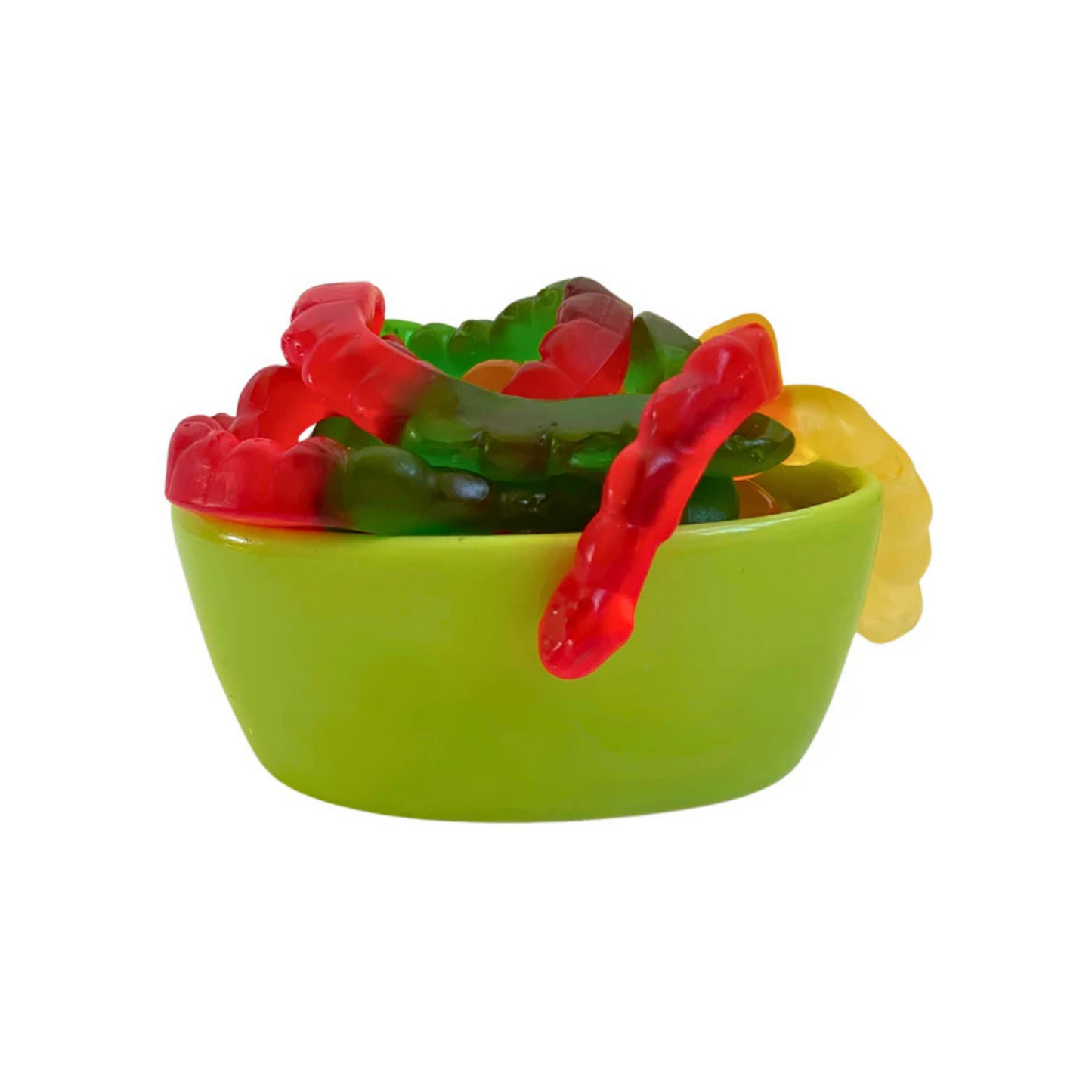
The real question about Gummy Worms is why eat them? Yes, the colorful gummy candies have the rich flavors and bright colors we expect from gummy candy. And yes- they have a soft, fresh texture, offering up that sink-you-teeth-into-it feeling we all know and love. But face it – the best thing hat gummy worms offer – and even such classics as gummy bear cannot offer – is the shape. Longish and warmish, they invite all sorts of eating possibilities, whether nibbling fraction-of-an-inch to fraction-of-an-inch or curling the whole worm in your mouth. Great for decorative purposes, too: think gummy worms climbing up a birthday cake. The kids would LOVE IT!
Product Details
Product Details
Size: 4 ounces in a 3x6" bag
Corn Syrup, Sugar, Water, Gelatin, Citric Acid, Natural and Artificial Flavors, Pectin, Vegetable Oil (Coconut [Tree Nut], Canola), Carnauba Leaf Wax (To Prevent Sticking), FD&C Red #40, Yellow #5, Yellow #6, Blue #1
Allergen Disclaimer: Please note that our products are made in a facility that processes peanuts, tree nuts, dairy, soy, and wheat. While we take precautions to prevent cross-contamination, we cannot guarantee that our products are allergen-free.
Historical Insights
Historical Insights
Gummy candy evolved in 1922, built on three traditions. One was the tradition of soft candies dating back, quite likely, to Turkish delight. Second was the popularity of gummy candies themselves. Papers in 1915, for example, described these treats as being “cheap” or “little gummy candy” perfect from decorative Easter collections to birthday parties. The third is the significance of bears and, by default, candy bears, popular in Europe since the late 1800s. In 1896, one article describes the popularity of bears, including candy bears, in Berne Switzerland, which, according to the author, is much like Germany. “The confectionary stores are full of candy bears and the baker’s shop full of gingerbread ones. It gets almost monotonous.”
It was in nearby Germany that Hans Riegel, founder of the company Haribo, united gummy candy and candy bears. The appeal of bears was said to be Riegel’s fascination with the actual dancing bears starting in the Middle Ages although, more likely, it was the popularity of bears overall. Gummy candy grew in popularity throughout the 20th century, making an entrance in the United States only in 1982. The American Candy company, Jelly Belly, got there first, introducing their own gummy candy in 1981.
A seemingly endless array of gummy candies are available today, such as gummy sushi, gummy soldiers, gummy skulls, and for a brief time, gummy roadkill. Gummies have also returned to candy’s original raison d'être, now used as a vitamin. Swedish Fish are a newer candy, created by Swedish Company Malaco in the 1950s for an American demographic. As if underscoring the similarities of gummies and jellies, the company calls their candy “fish-shaped fruity-flavoured jelly sweets.”
Another fish-inspired gummy, the blue gummy shark, demonstrates in its own way, the connection between gummies and culture. Gummy sharks are the name of an actual shark that lives off the coast of Australia where its candy self was introduced.
Shipping
Shipping
📩 Check Your Email for the Tracking Number! 📩
📢 B2B orders may take longer to ship than estimated
Please allow 3-5 business days for processing new retail orders. Many of our products are hand-made and assembled, so some orders may experience some delays depending on availability. Most orders are shipped within 5 business days. If you have any questions or concerns about your order please reach out to us.
Gummy candy evolved in 1922, built on three traditions. One was the tradition of soft candies dating back, quite likely, to Turkish delight. Second was the popularity of gummy candies themselves. Papers in 1915, for example, described these treats as being “cheap” or “little gummy candy” perfect from decorative Easter collections to birthday parties. The third is the significance of bears and, by default, candy bears, popular in Europe since the late 1800s. In 1896, one article describes the popularity of bears, including candy bears, in Berne Switzerland, which, according to the author, is much like Germany. “The confectionary stores are full of candy bears and the baker’s shop full of gingerbread ones. It gets almost monotonous.” It was in nearby Germany that Hans Riegel, founder of the company Haribo, united gummy candy and candy bears. The appeal of bears was said to be Riegel’s fascination with the actual dancing bears starting in the Middle Ages although, more likely, it was the popularity of bears overall. Gummy candy grew in popularity throughout the 20th century, making an entrance in the United States only in 1982. The American Candy company, Jelly Belly, got there first, introducing their own gummy candy in 1981. A seemingly endless array of gummy candies are available today, such as gummy sushi, gummy soldiers, gummy skulls, and for a brief time, gummy roadkill. Gummies have also returned to candy’s original raison d'être, now used as a vitamin. Swedish Fish are a newer candy, created by Swedish Company Malaco in the 1950s for an American demographic. As if underscoring the similarities of gummies and jellies, the company calls their candy “fish-shaped fruity-flavoured jelly sweets.” Another fish-inspired gummy, the blue gummy shark, demonstrates in its own way, the connection between gummies and culture. Gummy sharks are the name of an actual shark that lives off the coast of Australia where its candy self was introduced.
The Sweet Journey Through Time Starts Here!
True Treats is the only historically accurate candy store in the world, bringing the past to life through researched sweets, teas, syrups, and more. Every product is rooted in history, telling the story of how people from all walks of life enjoyed treats through time. Leading this effort is Susan, a nationally recognized candy historian, researcher, and author who appears regularly on TV, radio, and in major publications. With over 40 years of experience, she has written ten books and founded True Treats to share the fascinating history of candy in a fun and delicious way. Susan’s work uncovers the surprising origins of America’s favorite sweets, from ancient uses of sugar to the candies of the 1900s. Through True Treats, Susan makes history an interactive experience, allowing customers to taste the past while learning the stories behind every bite.


