


Cream Filberts - Handmade
Cream Filberts - Handmade
SKU:
Couldn't load pickup availability
DESCRIPTION
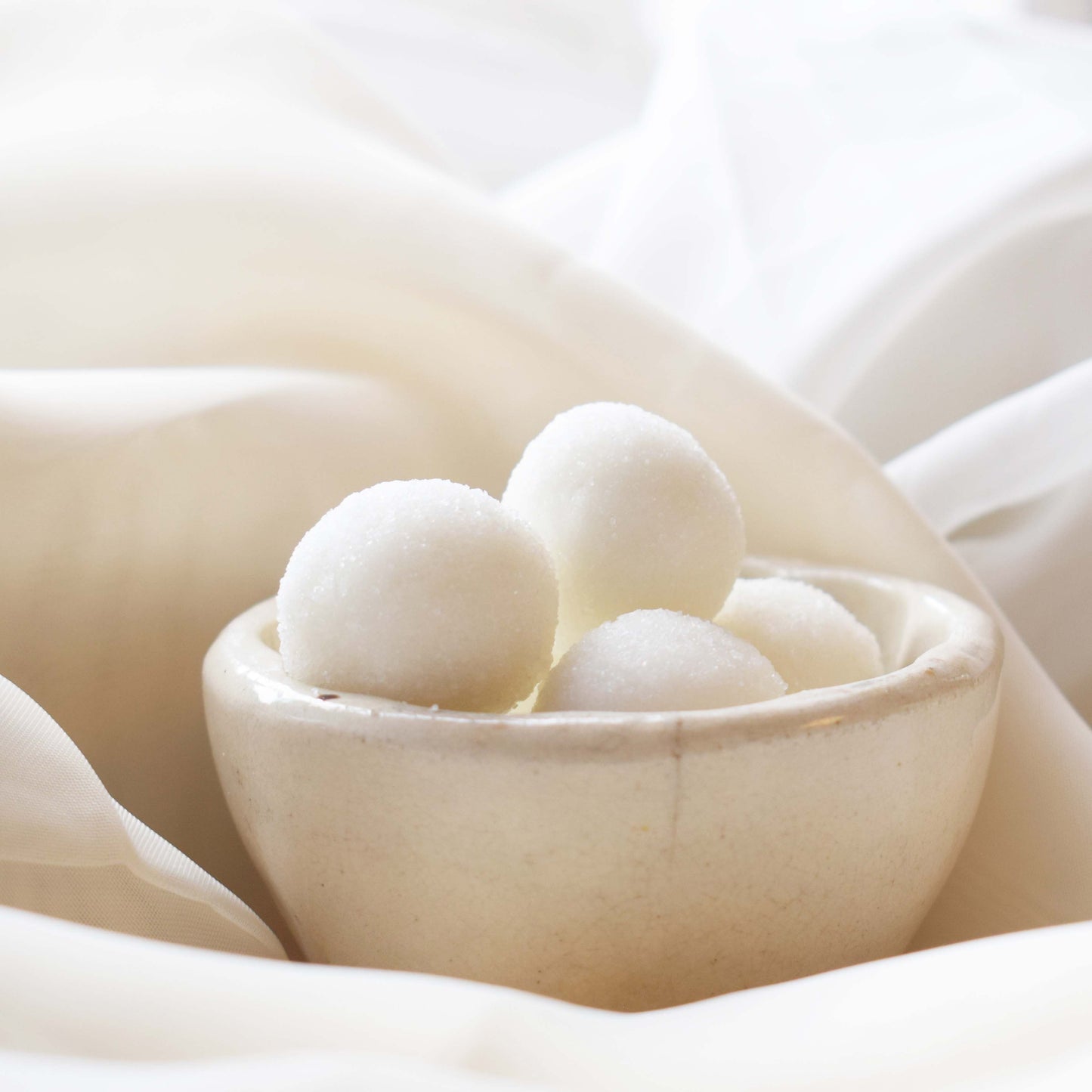
Why are Cream Filberts the perfect sweets? Because they are tasty, nicely textured, and a traditional treat dating back centuries, at least to the 1700s. This delight contains a filbert surrounded by creamed sugar which is then surrounded by a crisp sugar shell. The flavor is sweet but not cloying, followed by the nutty taste of the filbert within. The texture is unlike any you’ve had before. It starts with a gentle crunch of the sugar coating surrounding the candy, followed by a smooth, creamy sugar layer, which ends with the crunch (not too hard but not soft) of the filbert. What’s just as exciting about handmade cream filberts is its story: cream filberts are version of sugar plums, later called "mothball candy," in the mid-1900s.
Product Details
Product Details
Fondant sugar, filberts, sugar, water.
Allergen Disclaimer: Please note that our products are made in a facility that processes peanuts, tree nuts, dairy, soy, and wheat. While we take precautions to prevent cross-contamination, we cannot guarantee that our products are allergen-free.
Historical Insights
Historical Insights
Cream filberts are a nut surrounded by a layer of creamy sugar, encompassed by a thin, crisp, layer of sugar. They weren’t as
rugged as other nut-based candies, such as Jordan almonds, and demanded intensive focus on how they were displayed. The American Food Journal of 1917 put it this way:
“Cream Filberts should not be displayed in open boxes or trays as
they dry out very quickly, become hard and have a chalky appearance. In airtight glass jars they will keep nice and soft and the crystal remain bright almost indefinitely.
“It seems common practice with the retailer to dump a lot of …cream filberts into the show window, evidentially for the purpose of tempting someone to buy them. In a very short time, dust settles all over them, and they are dirty, unattractive, and create about as little desire to purchase, as so many
mud marbles. Might as well expect a snowball to stay white in a coal mine, as to expect cream filberts to stay white if displayed openly in a show window.”
Cream filberts had another distinguishing characteristic – they were frequently made at home. In the Cook’s Dictionary”
of 1830, author Richard Dolby adds quite a few iterations on the filbert theme including the “White Burnt Filbert.” This recipe AKA “receipt” calls for roasting the filbert, then dropping it into boiling sugar, removing it with a sieve, letting it dry, then dropping it into boiling sugar again.
In all fairness, Dolby, a cook at the “Thatched-House Tavern” in London was writing his cookbook primarily for domestics, as were most cookbooks of the time, but applies to anyone with the means to obtain the ingredients and fuel for cooking.
But what of the creamy sugar we find in the cream filberts of today? More than likely those appeared along with the cream
candies and pulled creams of the mid-1800s. They are an interesting hybrid of traditional candy with a nut at the center and the more general fine candy. Likely the creamy layer was dipped or brushed on the filbert but not boiled, and the crunchy sugar shell created in any number of ways. Think: Crème Brulé
or low intensity baking.
Shipping
Shipping
📩 Check Your Email for the Tracking Number! 📩
📢 B2B orders may take longer to ship than estimated
Please allow 3-5 business days for processing new retail orders. Many of our products are hand-made and assembled, so some orders may experience some delays depending on availability. Most orders are shipped within 5 business days. If you have any questions or concerns about your order please reach out to us.


Handmade Cream Filberts or Mothball Candy? What’s in a Name in Civil War Era Candy & 1800s Candy?
If the term “cream filbert” doesn’t sound familiar, the alternate name might. That would be “mothball candy.” Handmade cream filberts were a beloved part of civil war era candy traditions, later recognized among treats often found in a civil war candy box, and remained popular into the evolving world of 1800s candy. What happened is this: handmade cream filberts became a popular candy in the 19th century and early 20th century. Then, as with so many things, the venerable candy’s popularity waned. Just when it seemed that the cream filbert was all but forgotten, it rose up in the mid-1900s as the ubiquitous mothball candy. Why mothball? Because they looked like those mothballs that spared expensive clothing from the ravages of moths, although they left a scent on the clothing, homes, and individuals who used them. Eventually, the mothball candy/cream filbert fell into anonymity, skirting the edges of those forgotten candies we now call retro. One thing is sure – popularity, riches, and fame may wane…but handmade cream filberts will always belong to the True Treats family. Look at what Susan reveals about the alluring past of handmade cream filberts and their connection to 1800s candy traditions.
The Sweet Journey Through Time Starts Here!
True Treats is the only historically accurate candy store in the world, bringing the past to life through researched sweets, teas, syrups, and more. Every product is rooted in history, telling the story of how people from all walks of life enjoyed treats through time. Leading this effort is Susan, a nationally recognized candy historian, researcher, and author who appears regularly on TV, radio, and in major publications. With over 40 years of experience, she has written ten books and founded True Treats to share the fascinating history of candy in a fun and delicious way. Susan’s work uncovers the surprising origins of America’s favorite sweets, from ancient uses of sugar to the candies of the 1900s. Through True Treats, Susan makes history an interactive experience, allowing customers to taste the past while learning the stories behind every bite.
I have been trying to find the name of these for the past 57 years. It's awesome to have this treat again. I will be ordering again, I'll probably be a regular customer as I was when I was 12, getting them from a company I can't remember the name of, only that they were in a glass case on 12th Street in downtown Wheeling, WV.
Memories from when I played canasta with my grandma. We would eat "sugar balls" while we played cards.
Cream Filberts were my late Mom’s FAVORITE! So finally I remembered this year to surprise my sister and found your company. The filberts were awesome sooo fresh!! We both cried Christmas morning over the memories.
Tried these for the 1st time a year ago. Was pleasantly pleased. Great unique taste.
They were just like I remembered them. I will definitely order again.


