


1700s Time Capsule
1700s Time Capsule
SKU:400000006840
Couldn't load pickup availability
DESCRIPTION
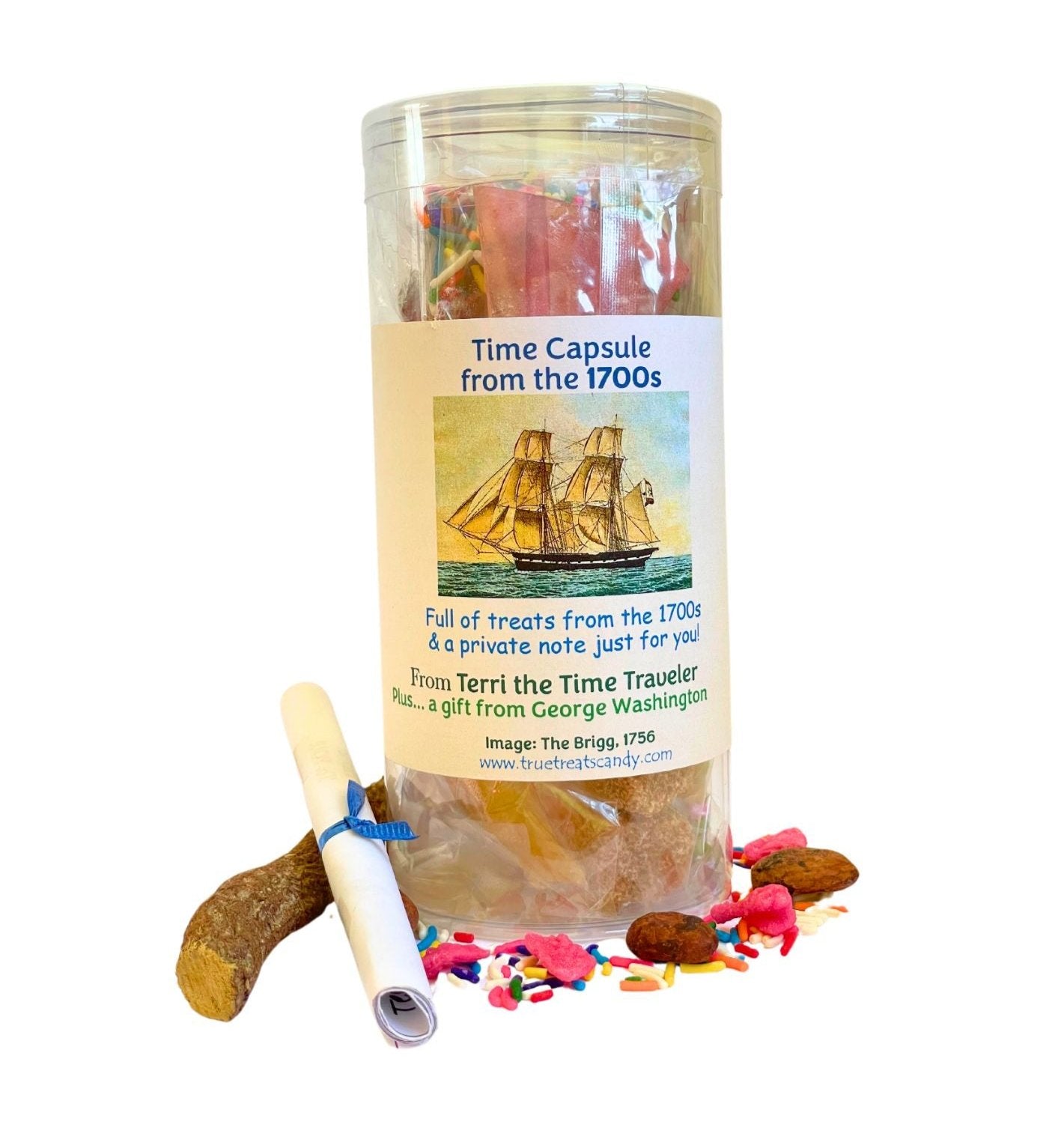
EXCLUSIVE TO TRUE TREATS! Give someone you love a taste of 1700s sweets and treats in this time capsule straight from Terri the Time Traveler. Inside this easy-to-open/easy-to-close capsule you'll find12 authentic samples, PLUS:
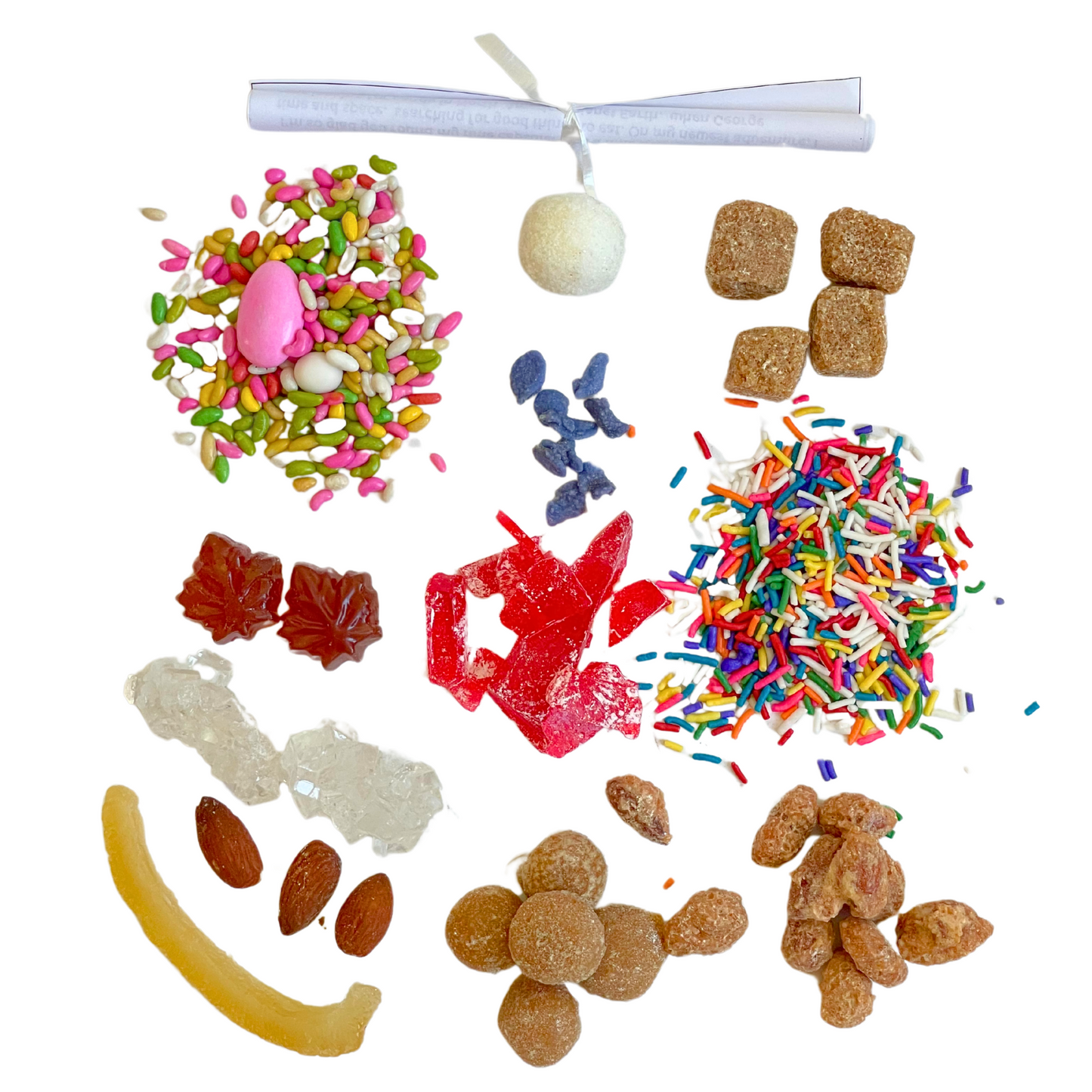
- Eighteenth-century sweets and treats from maple candy to candied flower petals, authentic sugar plums, stained-glass candy, and much more—always an adventure!
- A letter from your guide, Terri the Time Traveler, describing the stories behind each 1700s sweets selection, fascinating to kids and grown-ups alike.
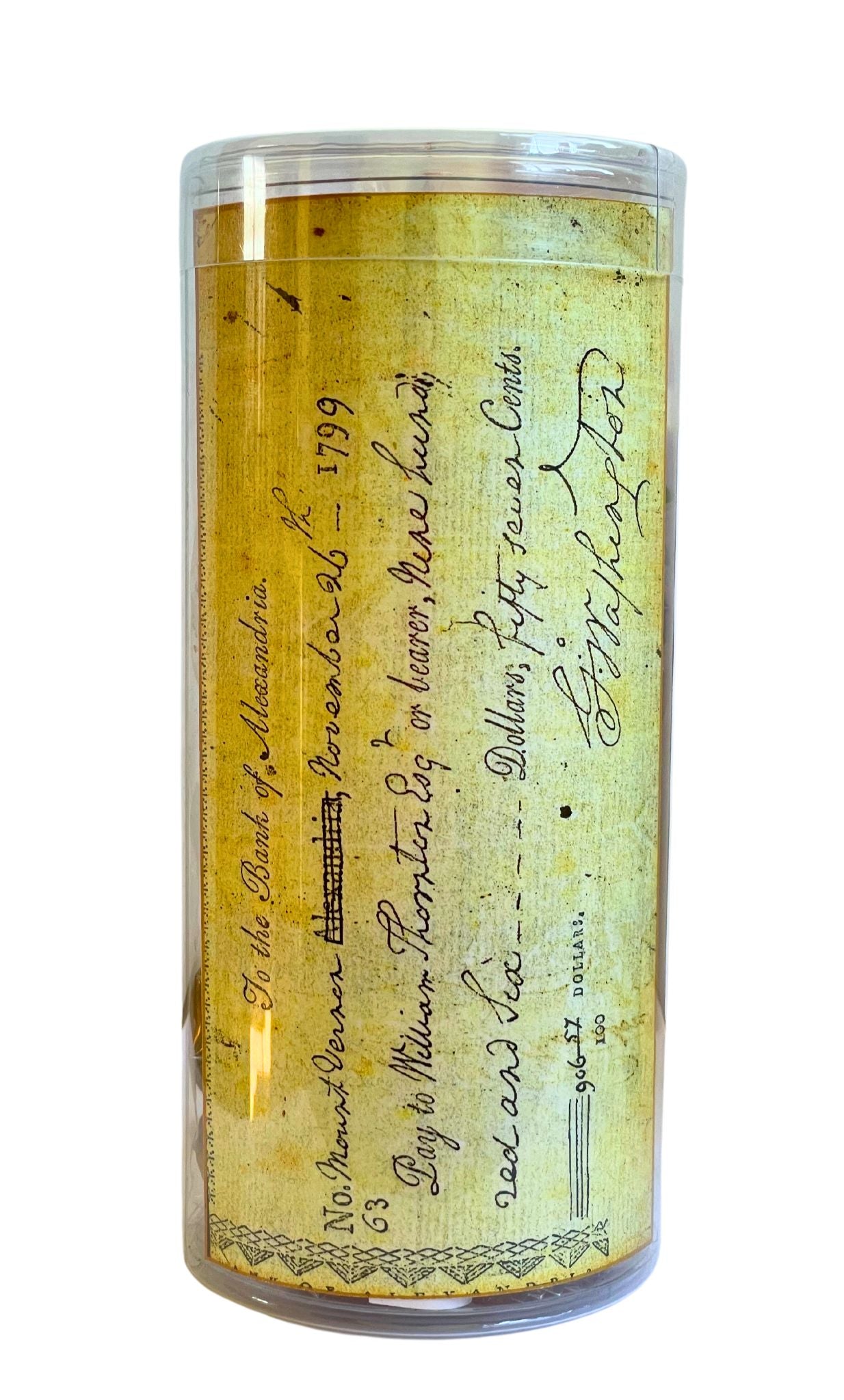
- A copy of an actual check written and signed by George Washington, made out to the “bearer” of this check—which, as the Time Traveler explains, “is you!”
Perfect as part of our historic candy gifts line, this capsule is based on the research of True Treats’ founder Susan Benjamin. Get a signed copy of her award-winning book, "Sweet as Sin "most and her newest arrival, Fun Foods of America
Product Details
Product Details
Over 12 samples in a 2 3⁄4 x 6" capsule
Licorice Root, Maple Drops- Pure Maple Sugar with Cane Sugar. Sugar Cubes, (Cane Sugar), Rock Sugar-Cane Sugar. Stain Glass ( May be Various Flavors) (Cherry or Lemon)– Sugar, Corn Syrup, Flavor, FD&C Colors) Sorghum- Sorghum Molasses, Cane Sugar, Corn Syrup, Caramel Color. Sugar Plums- Sugar, Acacia and Arabic Gum, Natural Vanilla, Fennel, Titanium Dioxide, Almonds, Anise Seed, Menthol, Enthocyanin Oleoresin, Beet and Cabbage Juice, Cochineal Extract, Food Coloring. Petals- Whole Violets or Roses, sugar, gum Arabic, and certified food coloring. Peels- Lemon Or Orange- Lemon peel or Orange Peel, glucose syrup, sugar, citric acid, Sulphur dioxide. Cinnamon Almonds (Almonds, sugar, cinnamon, pure vanilla, salt), Cacao (organic cacao beans), Dragees ( Almonds, Sugar, Gum Arabic, Natural Vanilla and other Natural Flavors, Turmeric Dioxide, beet root, anthocyannic, turmeric oleoresin, paprika, Carnuba Wax, bees wax), Cream Filbert (Fondant sugar, filberts, sugar, water) MAY CONTAIN SOY, MILK, EGG, PEANUTS, TREE NUTS AND WHEAT
Allergen Disclaimer: Please note that our products are made in a facility that processes peanuts, tree nuts, dairy, soy, and wheat. While we take precautions to prevent cross-contamination, we cannot guarantee that our products are allergen-free.
Historical Insights
Historical Insights
In the 1700s, sugar was used as a medicine to soothe sore throats and upset stomachs. Native Americans used maple sugar and Colonists used cane sugar cut into chunks. Enslaved workers grew and processed cane sugar. The work was extremely difficult, and they often had little food or sleep. These workers didn’t use cane sugar for themselves but boiled the sorghum plant into a thick, sweet syrup instead.
Confectioners also used sugar for candy, such as stained glass. Other plants from North America were made into popular candies such as sugar-coated flower petals and peels from lemons and oranges that were soaked in sugar syrup, called glacé. The licorice plant grew in North America, but people mostly used it as medicine or chewed the root to clean their teeth, instead of as a candy
Throughout the 1700s, spices, nuts, and fruits from distant lands arrived in seaports on huge ships. These were turned into fancy candies with interesting names, such as sugar plumbs, which were sugar-coated nuts and seeds; burnt almonds, coated with sugar and cinnamon; and tiny, decorative sugar bits called dragees. They even made a chocolate drink of cocoa tree beans from Mesoamerica. But beware! The old-time chocolate was bitter!
Shipping
Shipping
📩 Check Your Email for the Tracking Number! 📩
📢 B2B orders may take longer to ship than estimated
Please allow 3-5 business days for processing new retail orders. Many of our products are hand-made and assembled, so some orders may experience some delays depending on availability. Most orders are shipped within 5 business days. If you have any questions or concerns about your order please reach out to us.
1700s sweets: A Rich and Flavorful Historical Candy Gift
In the 1700s, sugar was used as a medicine to soothe sore throats and upset stomachs. Native Americans used maple sugar and Colonists used cane sugar cut into chunks. Enslaved workers grew and processed cane sugar. The work was extremely difficult, and they often had little food or sleep. These workers didn’t use cane sugar for themselves but boiled the sorghum plant into a thick, sweet syrup instead. Confectioners also used sugar for candy, such as stained glass. Other plants from North America were made into popular candies such as sugar-coated flower petals and peels from lemons and oranges that were soaked in sugar syrup, called glacé. The licorice plant grew in North America, but people mostly used it as medicine or chewed the root to clean their teeth, instead of as a candy Throughout the 1700s, spices, nuts, and fruits from distant lands arrived in seaports on huge ships. These were turned into fancy candies with interesting names, such as sugar plumbs, which were sugar-coated nuts and seeds; burnt almonds, coated with sugar and cinnamon; and tiny, decorative sugar bits called dragees. They even made a chocolate drink of cocoa tree beans from Mesoamerica. But beware! The old-time chocolate was bitter!
The Sweet Journey Through Time Starts Here!
True Treats is the only historically accurate candy store in the world, bringing the past to life through researched sweets, teas, syrups, and more. Every product is rooted in history, telling the story of how people from all walks of life enjoyed treats through time. Leading this effort is Susan, a nationally recognized candy historian, researcher, and author who appears regularly on TV, radio, and in major publications. With over 40 years of experience, she has written ten books and founded True Treats to share the fascinating history of candy in a fun and delicious way. Susan’s work uncovers the surprising origins of America’s favorite sweets, from ancient uses of sugar to the candies of the 1900s. Through True Treats, Susan makes history an interactive experience, allowing customers to taste the past while learning the stories behind every bite.


